AI Reputation Tools That Analyze LLM Responses (2026 Guide)

TL;DR
AI reputation management tools now do two distinct jobs: generating LLM-powered review responses on your behalf, and analyzing what LLMs like ChatGPT and Gemini say about your brand in AI search results. The best platforms handle both — letting you monitor AI-generated brand mentions while automating contextual, on-brand review replies at scale.
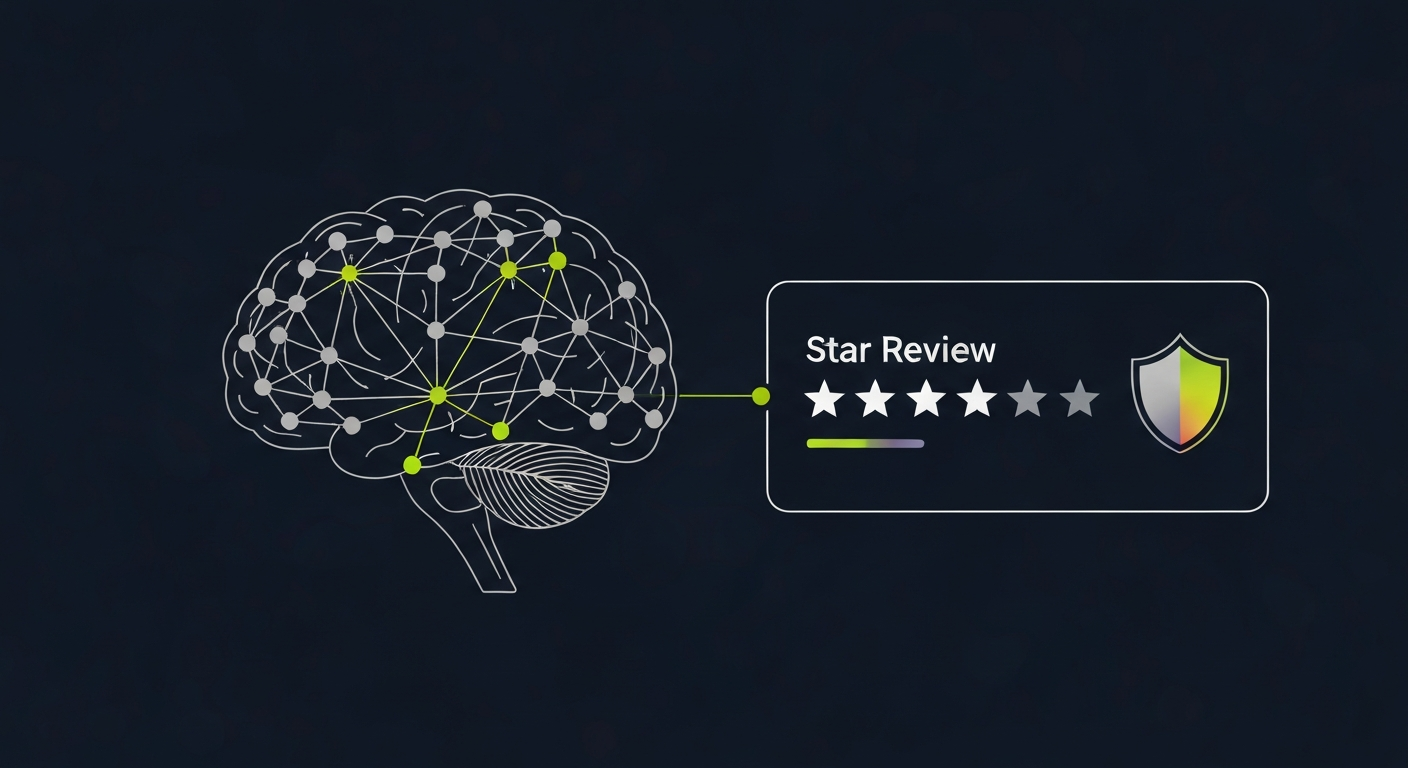
In 2026, your brand's reputation lives inside AI systems as much as on review sites. When someone asks ChatGPT "best reputation management software" or Perplexity "is [your business] worth it?" — the AI's answer shapes buying decisions before the person ever reads a single review. AI reputation management tools that analyze LLM responses let you track those AI-generated answers and fix them, while also automating your replies to real customer reviews.
This guide compares 4 platforms that cover one or both capabilities — so you can see exactly what each tool does, what it costs, and which one fits your situation.
Two Ways AI Reputation Tools Analyze LLM Responses
The phrase "AI reputation management tools that analyze LLM responses" describes two distinct capabilities that are both becoming essential in 2026:
1. Analyzing what LLMs say about your brand
When a potential customer asks ChatGPT "what's the best reputation management software?" or asks Perplexity "is [your business] trustworthy?" — the AI's answer becomes part of your brand's online reputation. Tools that analyze LLM responses in this sense monitor what major AI models (ChatGPT, Gemini, Perplexity, Claude, Grok) say about your business and flag when those responses contain inaccuracies, omissions, or unfavorable comparisons.
This discipline is often called Generative Engine Optimization (GEO) or AI brand monitoring. It works by systematically querying AI systems with brand-relevant prompts, capturing the responses, and tracking changes over time. Praising.ai's AI Ranking feature does exactly this — running regular queries across AI systems to show where your brand appears (or doesn't) in LLM-generated answers, and what competitors get recommended instead.
2. Analyzing the quality of LLM-generated review responses
The second meaning — analyzing LLM responses in the sense of AI-written review replies — refers to evaluating the output your review management platform generates before it goes public. This includes checking whether the AI response genuinely references the review content, maintains your brand voice, avoids legal risk in negative-review scenarios, and feels human enough to rebuild trust.
Both capabilities matter for a complete reputation management strategy. The tools below cover both.
Quick Comparison: 4 AI Reputation Tools That Analyze LLM Responses
| Tool | LLM Brand Monitoring | AI Review Reply Generation | Starting Price |
|---|---|---|---|
| Praising.ai | ✅ Tracks ChatGPT, Gemini & Perplexity | ✅ Context-grounded drafts | $19/mo |
| Birdeye | ✅ AI visibility reports included | ✅ Enterprise-grade responses | $300+/loc/mo |
| Podium | ❌ Not included | ✅ SMS-first approval workflow | Contact sales |
| Grade.us | ❌ Not included | ✅ Agency white-label replies | Agency pricing |
What Makes an LLM Response Tool Different from Basic Automation
Early review response automation worked on templates — swap in the reviewer's name, insert a stock sentence about "valuing your feedback," add a closing line. The result was obviously canned and often made customers feel dismissed rather than heard.
LLM-powered tools work differently. Instead of filling in blanks on a pre-written template, the AI reads the full review text, identifies the specific complaint or compliment, adjusts tone based on the star rating. Generates a response that directly addresses what the customer wrote. A 5-star review mentioning the speed of service gets a different response than a 5-star review praising a specific staff member. A 2-star complaint about a long wait gets an empathetic, apologetic reply — not a generic thank-you.
The quality gap between template-based automation and LLM-generated responses is significant. Customers can find template responses. Those responses often do more reputational damage than no response at all — they signal that the business isn't actually reading reviews.
Key Features to Evaluate in LLM Reputation Tools
Not all AI response tools use LLMs at the same ability level. When comparing platforms, focus on these factors:
Response specificity — Does the AI reference actual details from the review, or does it generate a generic reply that could have been written for any review? The best tools extract specific mentions (a dish, a staff member, a wait time, a feature) and incorporate them into the response.
Brand voice consistency — Can you configure tone guidelines, prohibited phrases, and response style? An AI that always responds formally may not fit a casual hospitality brand. The best platforms let you set voice parameters and learn from your existing approved responses.
Negative review handling — AI tools need different logic for critical reviews than for positive ones. Look for platforms that route low-star reviews to human approval, generate de-escalating language, and can offer a path to offline resolution.
Platform coverage — The tool should monitor and respond across Google, Yelp, Facebook, TripAdvisor, and the specific platforms that matter for your industry. A restaurant tool that only covers Google while missing TripAdvisor and OpenTable misses too much.
Approval workflow — Even with high-quality LLM outputs, a human-in-the-loop workflow for sensitive reviews is key. The best tools make it easy to review, edit, and approve AI-drafted responses before they go live.
The Best AI Reputation Management Tools for LLM Responses in 2026
- Praising.ai — Best for Context-Aware LLM Responses
Best for: Local businesses and SMBs that need high-quality AI responses without enterprise-level pricing or complexity.
Praising.ai uses a purpose-built AI pipeline that goes beyond generic response creation. The system grounds each response in your business context — your business type, location, past customer concerns, and approved response history. The result is responses that feel specific to your business rather than pulled from a generic AI prompt.
The platform splits its response workflow into two tracks: routine positive reviews (4–5 stars with standard content) can be auto-published if enabled, while anything sensitive — low star ratings, specific complaints, mentions of staff issues — routes to a human approval queue. Owners can review, edit, and publish from a single dashboard or mobile app.
LLM response strengths:
- Context-grounded creation using your business category and past review history
- Sentiment-adjusted tone — appreciative for positive reviews, empathetic for negative ones
- Editable drafts with one-click publish after human review
- Automatic detection of reviews requiring escalation
- Consistent brand voice training from approved response examples
Pricing: Starting at $19/month. See plans
- Birdeye — Best LLM Responses for Enterprise Multi-Location Businesses
Best for: National chains, franchise groups, and healthcare companies managing reputation across 20+ locations.
Birdeye's AI response system draws on its large dataset of industry-specific review patterns to generate contextually right responses for each review category. The platform's enterprise focus means its LLM tooling is configured for scale — high-volume response queues, location-level approval workflows. District manager dashboards for oversight.
The LLM response quality is solid across all star ratings, with certain strength in regulated industries like healthcare and financial services where specific compliance language matters. The trade-off is cost: Birdeye's full AI feature set usually starts at $300+ per location per month. It difficult to justify for single-location businesses.
For alternatives at different price points, the Birdeye alternatives guide breaks down options across every budget tier.
- Podium — Best LLM Responses Delivered via SMS Workflow
Best for: Service businesses and automotive dealers where customer interaction is primarily SMS-based.
Podium built its platform around text messaging, and its LLM response tooling reflects that focus. The AI generates responses optimized for the notification-first channel — clear, conversational. Action-oriented — while maintaining brand voice consistency across Google and Facebook where reviews actually live.
The notification system sends review alerts directly to the business owner's phone, with one-tap approval of the AI-drafted response. For field-based service businesses where the owner is rarely at a desktop, this mobile-first approval workflow is a practical advantage.
- Grade.us — Best LLM Responses for Agencies Managing Multiple Clients
Best for: Digital marketing agencies handling reputation management for local business clients.
Grade.us focuses on white-label reputation management with LLM response capabilities that agencies can deploy across client portfolios. Each client gets a branded dashboard, and the AI can be trained on client-specific voice guidelines. Agencies control pricing and packaging.
The platform's LLM response quality is competitive, though the agency-intermediary model adds a layer between the business and its review data that some direct business owners prefer to avoid.
Case Studies: LLM Reputation Tools in Practice
Here's how three businesses used AI reputation tools that analyze LLM responses to improve their review strategy — including the specific before-and-after numbers.
Case Study 1: Regional Dental Group (8 Locations)
The challenge: A regional dental group with eight locations was manually responding to reviews once a week. Average response rate: 23%. Response time averaged 6 days from review date. The inconsistency meant some reviews sat unanswered for weeks, while urgent complaint reviews received the same delayed treatment as routine positive ones.
The approach: Implemented AI review response software with context-grounding trained on 400 of their existing approved responses. Configured auto-publish for 5-star reviews mentioning routine appointments, hygiene, or staff friendliness. Routed anything below 4 stars — or any mention of billing, pain, or wait time — to human review.
Results after 90 days:
- Response rate: 23% → 91%
- Average response time: 6 days → 4 hours
- Staff time on review management: ~3 hours/week → 20 minutes/week (reviewing and approving flagged responses)
- 4 one-star reviews updated to 3–4 stars after receiving detailed, empathetic AI-drafted responses
Key insight: Context-grounding from the "dental practice" category significantly reduced the need to edit AI drafts. The AI defaulted to the right phrasing — always including an invitation to call the front desk for billing concerns, avoiding generic phrases that read as dismissive in a healthcare context.
Case Study 2: Fast-Casual Franchise Chain (22 Locations)
The challenge: A fast-casual franchise with 22 locations had no consistent review response process. Individual location managers responded inconsistently — some rarely, some never — creating brand voice fragmentation and an overall response rate below 30%. Corporate had no visibility into what individual managers were publishing on behalf of the brand.
The approach: Centralized reputation management through a single enterprise platform instance. Configured location-level approval workflows with brand voice guidelines enforced at the template level — specific phrases always required, certain phrases prohibited. District managers received weekly response quality reports.
Results after 6 months:
- Response rate: 28% → 84% across all locations
- Brand voice consistency (internal audit): 61% → 93%
- Average rating across all locations: 3.9 → 4.2 (partly from increased response activity, partly from operational changes driven by review pattern analysis)
- Identified two underperforming locations based on recurring food quality mentions — operations addressed with menu and prep changes
Key insight: Centralized AI response management surfaced operational issues that had been invisible at the corporate level. Review pattern data showed which specific complaints were recurring, at which locations, over which time periods. The AI response system became an operational intelligence tool, not just a reputation one.
Case Study 3: B2B SaaS Company Monitoring AI Search
The challenge: A B2B SaaS company noticed that prospects arriving at sales demos had already consulted ChatGPT or Perplexity about the product. Several AI-generated comparisons contained outdated pricing (18 months old) and omitted key features the product had added since its last major press coverage. The company had no visibility into what AI systems were saying about their brand.
The approach: Implemented systematic LLM response analysis, querying ChatGPT, Gemini, and Perplexity weekly with 15 prompts: category-level questions ("best [category] software"), competitor comparison questions ("[competitor] alternatives"), and direct brand queries. Tracked changes over a 4-month period.
Baseline findings:
- ChatGPT mentioned the company in 4 of 15 prompts (27% visibility)
- Gemini mentioned them in 8 of 15 (53%)
- Both models cited a pricing page that was 18 months out of date
- A competitor with fewer public reviews but more recent blog content appeared in 11 of 15 ChatGPT prompts
Actions taken over 4 months:
- Updated website and product pages to clearly state current pricing and the three features most often missing from AI summaries
- Published 6 comparison-focused blog posts citing verifiable, current data
- Ran a post-onboarding review campaign: Trustpilot review volume went from 41 to 140 reviews
Results after 4 months:
- ChatGPT visibility: 27% → 61% (4 of 15 → 9 of 15 prompts)
- Gemini visibility: 53% → 78%
- AI-cited pricing: corrected in both models
- Inbound demo requests increased 18% period-over-period (driven by multiple factors)
Key insight: LLM responses to brand-relevant queries don't update on a fixed schedule — they shift as the web content AI draws from changes. The fastest lever was publishing well-sourced, specific content that addressed exactly the questions prospects were querying AI systems about. Review volume on authoritative platforms (Trustpilot, G2) was the second major lever.
How to Get the Best Results from LLM-Generated Review Responses
The quality of AI-generated review responses depends heavily on how you configure the tool. These steps improve output quality across any platform:
Train with your existing responses. Most platforms allow you to import your existing review response history. The LLM uses these to learn your tone, typical phrasing, and how you handle different review types. A tool trained on 100 of your real responses produces greatly more on-brand output than one using generic defaults.
Set specific voice guidelines. Define your preferred tone (professional vs. conversational), prohibited phrases ("We value your feedback" is widely recognized as generic), and any required elements like an invitation to return or a contact email for issues. The more specific your guidelines, the more usable the AI output.
Create category-specific prompts. Configure different response styles for each review category your business commonly receives: food quality, service speed, staff friendliness, pricing concerns, cleanliness. Category-specific configuration produces more targeted responses than a single all-purpose setup.
Always review negative responses before publishing. Auto-publishing positive responses is reasonable once you've verified output quality, but negative reviews — anything below 4 stars, or any review mentioning a specific incident — should go through human review. The cost of a tone-deaf AI response to a serious complaint far exceeds the time saved by skipping approval.
Monitor response performance over time. Track whether AI-generated responses lead to review updates — customers who received a response are more likely to update a negative review upward. If you're not seeing contact or updates, the responses may need tone adjustments.
LLM Response Tools vs. Manual Response Writing: The Real Trade-Off
Businesses sometimes hesitate about AI responses out of concern they'll seem impersonal. The data suggests or else: customers care far more about receiving a response than about whether that response was AI-assisted. A prompt business response to a negative review increases consumer trust in a way that a personally written response delivered four days later often doesn't.
The practical question is whether the AI output is good enough to feel right and specific — not whether it was AI-generated. The platforms covered in this guide produce output that meets that bar when configured correctly.
For most businesses, the right approach is hybrid: AI handles the volume, humans approve anything sensitive. The overall response rate — the metric that drives local SEO ranking and customer trust — typically increases substantially within the first month of setup.
Monitoring What AI Systems Say About Your Business
The second job of AI reputation tools — tracking what ChatGPT, Gemini, and Perplexity say about your brand when someone asks a question — is newer than the review-reply function, and most businesses haven't started doing it yet.
The practical workflow involves querying AI models the same way a potential customer would. For a plumber in Chicago, that means prompts like "best plumber in Chicago," "who should I call for emergency pipe repair in Chicago," and "is [business name] a reliable plumber." For a SaaS company, it might be "best reputation management software," "[competitor] alternatives," or "what do businesses use to manage online reviews."
The outputs from these queries tell you three things: whether your business appears at all, how accurately the AI describes your services, and whether the AI frames your business positively, neutrally, or negatively relative to competitors.
Why this matters now: AI-generated answers in Google Search (AI Overviews), ChatGPT search, and Perplexity are increasingly what potential customers see before visiting a website. Gartner estimated that 25% of traditional search volume will shift to AI systems by 2026. For local services, SaaS, and professional services, AI model visibility is already a measurable acquisition channel.
Praising.ai's AI Ranking feature runs this analysis automatically — querying ChatGPT, Gemini, and Perplexity with category-relevant prompts for your business type and location, then tracking your brand mention rate, competitor comparisons, and visibility trends over time. The dashboard shows where your business appears in AI-generated answers and where gaps exist.
Three factors that influence LLM brand representation most:
Review volume and recency on authoritative platforms. AI models weight signals from Google, Trustpilot, and Yelp heavily. A business with 200 recent Google reviews will appear in AI responses for its category more reliably than one with 20.
Content that connects your business to specific terms. A florist whose website and blog content repeatedly connects them to phrases like "wedding florist," "same-day delivery flowers," and the target city is easier for an AI to cite accurately than one with sparse, generic web presence.
Accurate third-party data. If directory listings, aggregator sites, or news coverage describe your business incorrectly, that inaccurate data can propagate into AI responses. Correcting it at the source is the main lever you have.
Frequently Asked Questions
What does "analyzing LLM responses" mean in reputation management?
It means software systematically queries AI models — ChatGPT, Gemini, Perplexity — with prompts a real customer might use, then parses the output for brand signals: whether your business is mentioned, how it's described, whether the facts are accurate, and how you compare to competitors. This is distinct from review monitoring, which only tracks what people write on public platforms like Google or Yelp.
How is LLM response analysis different from regular review monitoring?
Review monitoring tracks what customers write about your business on public platforms. LLM response analysis tracks what AI models say when someone asks them a question. The two don't always match — an AI's answer about your business draws from training data and live web retrieval, which may include reviews but also news coverage, directory listings, and forum discussions. A business can have a strong 4.8-star rating on Google and still appear rarely (or negatively) in AI-generated category results.
Can I actually change what ChatGPT or Gemini says about my brand?
You can influence it, but not control it. The main levers: increasing review volume on platforms AI models frequently cite (Google, Trustpilot), publishing content that connects your business to relevant category terms, and fixing factual errors in the web sources AI draws from. There's no direct submission process the way Google Business Profile lets you edit your own listing. Results from content and review campaigns typically take 1–3 months to surface in AI responses.
Do I need a separate tool for LLM monitoring, or can my reputation platform handle both?
Most traditional review management platforms don't include LLM monitoring — they track review sites, not AI outputs. Praising.ai is one of the exceptions, building AI brand tracking into the same platform where you manage review requests, responses, and analytics. If your current platform doesn't cover it, standalone tools like Otterly.ai or Profound fill the gap, or you can check whether your SEO platform has added AI Overview tracking.
How often should I check what AI models say about my business?
For most small and mid-size businesses, monthly manual checks (querying ChatGPT and Gemini with 10–15 relevant prompts) combined with quarterly tool-generated reports is a practical cadence. If you operate in a competitive category or recently had a reputation event — a negative press mention, a spike in one-star reviews — check more frequently. LLM outputs can shift as new content is indexed and model knowledge refreshes.
Ready to see LLM-powered review responses in action? Praising.ai offers a 7-day free trial with AI response drafting included from day one — a payment method is required to start.
Ready to grow?
Turn happy customers into 5-star reviews
Praising.ai automates review collection across Google, Trustpilot, Yelp, and 20+ platforms. Businesses see an average 3x increase in reviews within 30 days.
Written by
· 64 articlesLeila Foster
AI & Digital Marketing Writer
Leila covers the intersection of AI and customer marketing—specifically how businesses use social proof, automated testimonials, and AI-generated responses to build trust and convert more visitors. She researches the tools and workflows behind modern reputation marketing so you don't have to.
View all articlesGet weekly review tips
Actionable strategies to grow reviews and revenue, straight to your inbox.
No spam. Unsubscribe anytime.
Get more 5-star reviews on autopilot
Praising.ai automates review collection across Google, Trustpilot, and 20+ platforms — no credit card required.
Start FreeFree 14-day trial