Google Review Guidelines: What Gets Removed in 2026

TL;DR
Google removes reviews that contain fake or paid content, personal data, hate speech, off-topic commentary, or conflict-of-interest bias. Automated systems flag suspicious patterns like bulk submissions and template language, while human reviewers catch subtler violations. Knowing these rules helps you flag illegitimate negative reviews and ensure your own review-collection practices stay compliant.
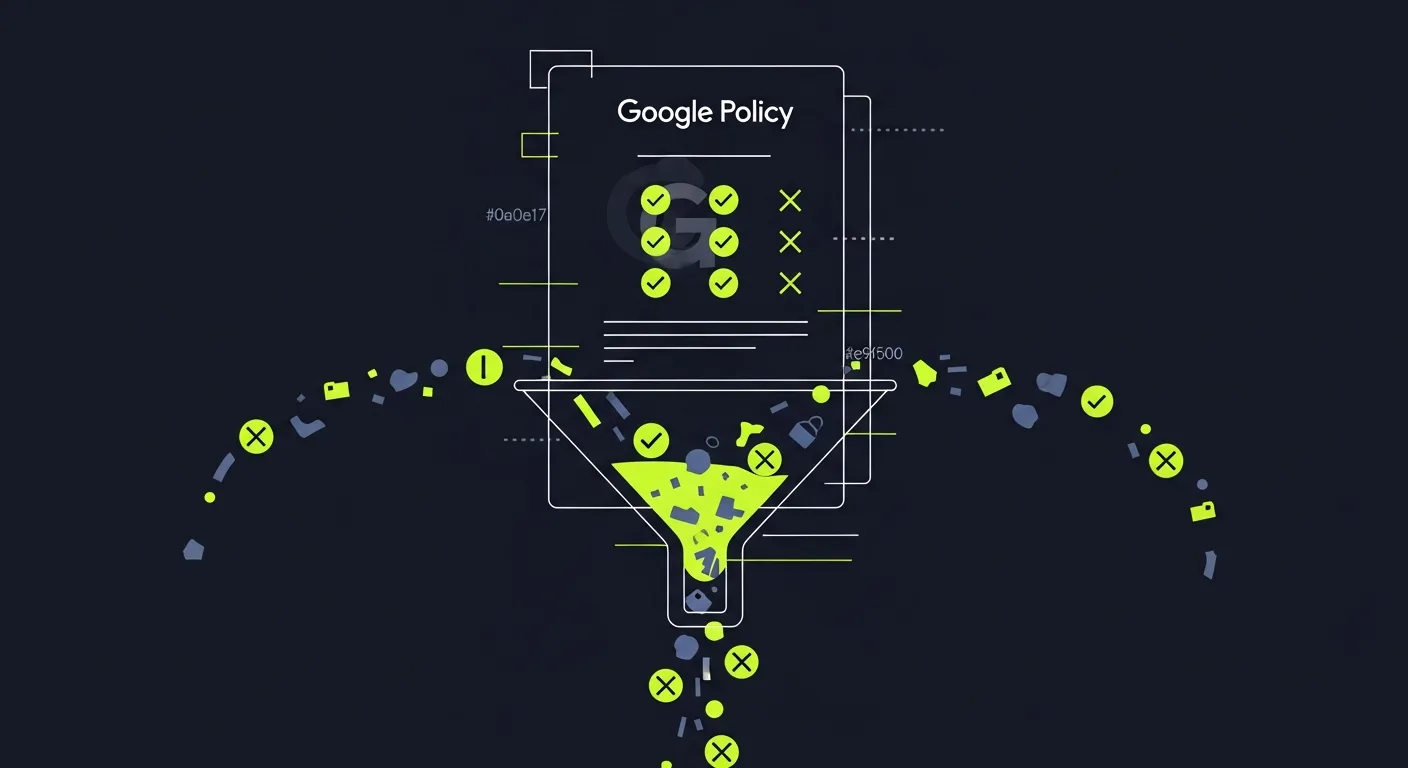
Google Reviews can make or break your business. 88% of consumers read reviews before buying. Google removes millions of them each year for rule breaks. Some removals are obvious — fake reviews or spam. Others catch business owners off guard. This guide covers what gets removed and how to stay on the right side of the rules.
Google's Core Review Guidelines
Google's review system runs on three core values: relevance, helpfulness, and honesty. Reviews must come from real experiences. They should give useful data to other customers.
The Authenticity Standard
Google hunts for fake reviews — both by machine and by human. Here's what they check:
- Review patterns and timing
- IP addresses and device data
- Reviewer account history
- Language patterns and tone
- Whether the reviewer's location matches the business
A restaurant in Chicago getting five 5-star reviews in one hour — all from same-day accounts — is a clear red flag.
Content Quality Requirements
For a review to stay up, it must:
- Come from a real visit or purchase
- Be relevant to that specific business
- Use clear, easy-to-read language
- Focus on actual events, not "what if" scenarios
Google pulls reviews that miss these standards, even if they're from real customers.
Content That Google Automatically Removes
Spam and Fake Reviews
Google's systems catch most spam before it goes public. These patterns trigger removal:
- Bulk campaigns — many reviews from the same source in a short window
- Template reviews — same or very similar text used across many reviews
- Paid reviews — written in exchange for money, gifts, or discounts
- Rival attacks — negative campaigns planned by a competitor
Banned Content Types
Personal Data
Any review with personal details gets removed. This covers:
- Phone numbers or email addresses
- Home addresses or exact location details
- Credit card or bank data
- Social security numbers or government IDs
Harmful Content
Google also removes reviews that include:
- Profanity or crude language
- Sexual or suggestive content
- Hate speech targeting protected groups
- Graphic violence
Legal Issues
Reviews get pulled for legal reasons too. Flagged content includes:
- False claims stated as fact
- Copyright-protected material
- Content covered by legal privacy rules
- Anything that breaks local laws
Off-Topic Reviews
Google removes reviews that don't relate to the actual business. That includes:
- Political content not tied to the service
- Disputes with staff that aren't about the business itself
- Complaints about an entire industry, not this specific business
- Reviews that mention rival or unrelated businesses
A review on a plumber's page saying "all plumbers charge too much" gets pulled for being off-topic.
The Gray Area: What Might Get Removed
Conflict of Interest Reviews
Google bans reviews from people with a clear stake in the outcome. That means:
- Business owners rating their own company
- Staff reviewing their own workplace
- Rivals leaving negative reviews
- Family members or close friends
The tricky part: catching these is spotty. Google doesn't always find these links. Some biased reviews slip through.
Extreme or Emotional Reviews
An emotional review won't get pulled on its own. But Google looks more closely at reviews that seem way out of step with the issue. It also flags reviews that read like personal attacks rather than real customer stories.
Review Bombing and Planned Attacks
Sometimes a business gets hit with a wave of negative reviews all at once — often after a news story or public event. When this happens, Google may:
- Temporarily hide new reviews
- Remove reviews that look planned
- Require extra checks for new reviewers
This happened to many businesses during 2020's social unrest.
How Google Detects Bad Reviews
Automated Detection Systems
Google uses several layers of analysis to find bad reviews.
Language scans check text for spam patterns. They flag banned content and spot dishonest tactics.
Behavior tracking watches how reviewer accounts act over time. It checks timing, frequency, device, and location data.
Network analysis maps links between reviewers. It spots planned campaigns and flags odd account clusters.
Human Review Process
When the system flags a review, a human steps in. They read the full context. They check the reviewer's history and trust. They look at any claims about a business link. Then they make the final call.
This process takes 2 to 5 business days for reported reviews.
What Stays: Legitimate Negative Reviews
Google does NOT remove reviews just because they're negative. These types of reviews are safe:
Factual complaints with specific details:
- Service failures with clear examples
- Product quality issues backed up with specifics
- Pricing disputes with proof
- Wait time or scheduling problems
Personal experiences that are genuinely subjective:
- Opinions about service quality
- Feelings about the space or staff
- Comparisons to other businesses
- Tips for improvement
Helpful criticism that stays civil usually stays up — even at one star.
Here's the difference: "Food took 45 minutes and was cold when it arrived" stays up. "This place sucks and the owner is an idiot" gets removed for being vague and offensive.
Business Owner Response Guidelines
What to Include in Responses
When you respond to a review, you should:
- Address the specific concern raised
- Stay calm and polite — no personal attacks
- Offer a fix or explanation
- Thank the reviewer for their feedback
What Not to Include in Responses
Never include any of the following:
- The customer's personal details
- Legal threats or warnings
- Attacks on the reviewer
- Off-topic promo content
- Requests to change or delete the review
If you break these rules, Google can take away your ability to reply to reviews.
Reporting Bad Reviews
When to Report
Report a review if it clearly breaks Google's rules. Good reasons to report:
- Fake reviews from non-customers
- Reviews with banned content
- Spam or template reviews
- Reviews from rivals or staff
How to Report Effectively
Pick the most accurate reason from Google's options. Be specific about what the review does wrong.
Include supporting evidence if you can:
- Screenshots of the review
- Proof the reviewer isn't a real customer
- Records of a rival relationship
What to Expect
The process takes time:
- First review: 3 to 5 business days
- Appeals: 1 to 2 weeks
- Some cases need more than one review cycle
Google removes about 30 to 40% of reported reviews. Success rates vary:
- Spam and fake reviews: 65–75% removal rate
- Harmful content: 80–90% removal rate
- Off-topic reviews: 45–55% removal rate
- Conflict of interest reviews: 25–35% removal rate
Protecting Your Business
Monitoring Your Review Profile
Regular checks help you catch problems early. Good habits:
- Check reviews weekly for new content
- Watch for sudden drops in your rating
- Look for patterns in negative reviews
- Note details about odd-seeming reviewers
Praising.ai's review tracking features can do this for you. You'll get alerts when issues show up, so you don't have to check by hand.
Building a Real Review Strategy
The best reviews are earned, not chased. That means:
- Delivering service worth talking about
- Following up with customers after their visit
- Fixing problems before they turn into complaints
When asking for reviews:
- Ask happy customers directly
- Make the process quick and easy
- Time requests after good experiences — not bad ones
When responding to reviews, reply to all of them. Thank happy customers. Address concerns without being defensive.
Avoiding Common Pitfalls
These mistakes get businesses in trouble:
- Asking staff or family to write reviews
- Offering deals or gifts for positive reviews
- Creating fake customer accounts
- Responding defensively to criticism
- Trying to remove real negative reviews
The Future of Google Review Guidelines
Google keeps updating its review policies to stay ahead of abuse. Three trends stand out.
Smarter detection. Google's systems are getting better at catching fake reviews, spotting planned campaigns, and reading honesty signals.
Stricter rules for owners. There's more focus on owner responses, better detection of staff reviews, and closer tracking of reward programs.
More clarity. Google is moving toward clearer removal notices, better appeals, and improved guidance for business owners.
Working with Review Management Platforms
Good review management tools help you stay within Google's rules while building a strong profile. Look for platforms that offer:
- Checks for rule breaks
- Review request systems built around Google's rules
- Response templates that follow best practices
- Analytics to track your review health
Pick platforms that focus on doing it right, not just doing it fast. Shortcuts that break Google's rules can do lasting damage.
Frequently Asked Questions
Can Google remove positive reviews?
Yes. Fake 5-star reviews, paid reviews, and reviews from staff all get removed regardless of rating. Google's goal is honesty — not propping up ratings.
How long do removed reviews stay gone?
Usually for good. Google's removal decisions don't get reversed unless there was a mistake. Reviewers can appeal, and Google may restore a review if it was wrongly removed.
Why was my review removed when I'm a real customer?
Real reviews can still be removed. Common reasons: offensive language, off-topic content, personal data, or patterns that look like spam. Even real reviews must follow the content rules. If your review simply hasn't appeared yet, it may be in the pending queue—not removed. Google holds reviews for up to 7 days before making a removal final.
Can businesses pay Google to remove negative reviews?
No. Google doesn't offer paid removal. Anyone claiming they can pay to remove real reviews is lying or using methods that could harm your profile for good.
How do I appeal a review removal decision?
Use Google's appeal process in Google Business Profile. Explain why the review should be restored. Include proof of a real customer link and show how the review follows Google's rules.
What happens if I violate review guidelines as a business owner?
You might lose the right to reply to reviews, have new reviews hidden for a time, or face lasting limits on your Google Business Profile. More rule breaks can hurt your search rankings.
Ready to grow?
Turn happy customers into 5-star reviews
Praising.ai automates review requests for Google, Trustpilot and the other review sites you use. Businesses see an average 3x increase in reviews within 30 days.
Written by
· 106 articlesMarcus Webb
Reputation Management Specialist
Marcus has spent over a decade helping small and medium businesses understand online reviews and local search. He writes about Google Business Profile, review automation, and the mechanics of reputation management—always from the angle of what actually moves the needle for independent businesses.
View all articlesGet weekly review tips
Actionable strategies to grow reviews and revenue, straight to your inbox.
No spam. Unsubscribe anytime.
Get more 5-star reviews on autopilot
Praising.ai automates review requests for Google, Trustpilot and the other review sites you use — free to start, no credit card required.
Start FreeFree 14-day trial