Average Cost of Reputation Management in 2026: The Complete Guide

TL;DR
Reputation management costs range from $19/month for AI-powered software to $50,000+/month for enterprise agencies, with most small and mid-market businesses spending $50–$2,000/month. The biggest cost driver is not which vendor you pick but whether you choose software or agency, often a 10–30x price difference. Location count and platform breadth are the two variables that inflate costs fastest as you scale.
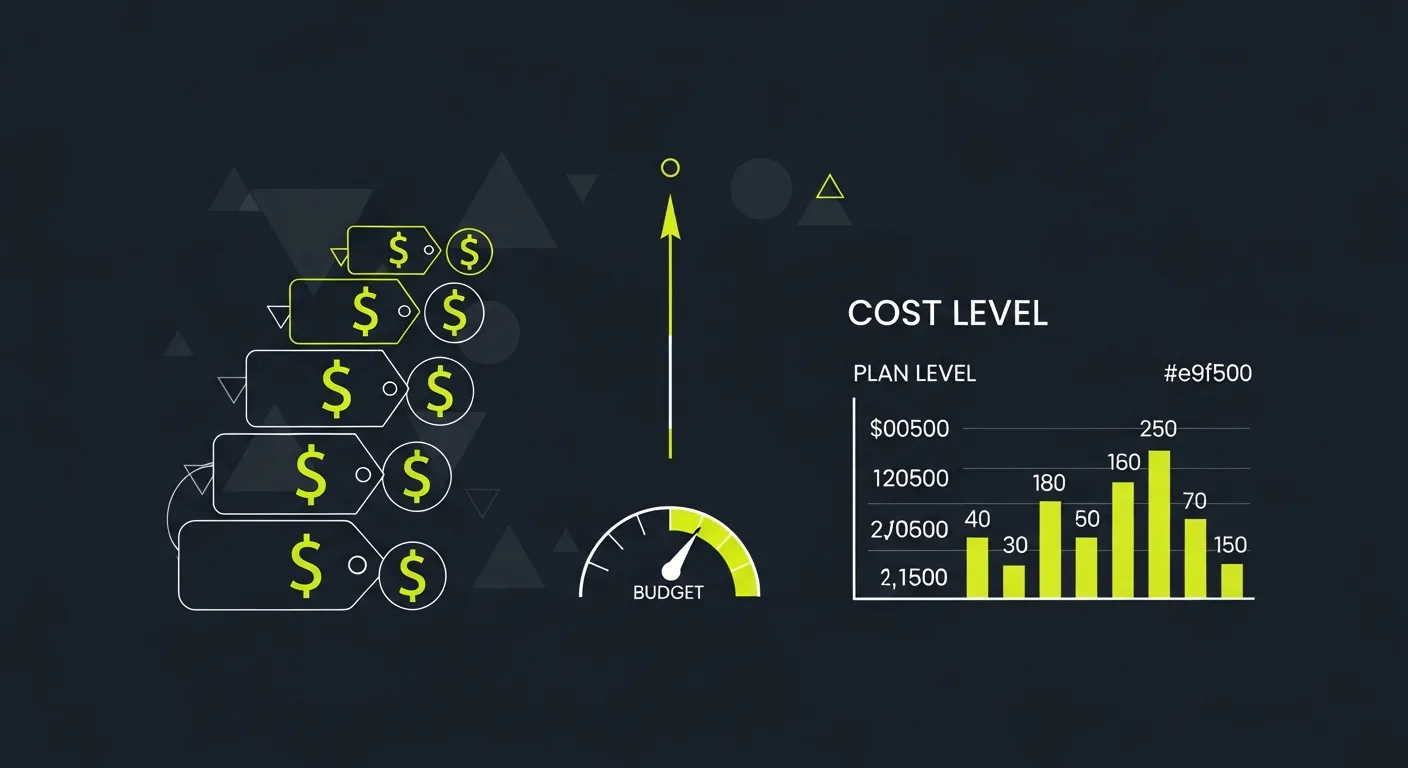
The average cost of reputation management ranges from $0 to $50,000+ per month depending on the size of the business, the tools used, and whether you hire an agency or handle it yourself. That six-figure range hides more than it reveals. A solo plumber in Oklahoma and a 200-location hotel chain face completely different cost structures, and applying the wrong pricing model to either one wastes money or leaves real business impact on the table.
This guide breaks down exactly what businesses at every stage pay for reputation management in 2026, what drives the price up or down, and how to decide what your business should budget for today.
What Is the Average Cost of Reputation Management?
Reputation management services cost anywhere from $19 per month (AI-powered software for a single location) to $50,000+ per month (full-service enterprise agency with crisis support and dedicated account teams).
The most common range for small to mid-market businesses is $50–$2,000 per month. That range captures the majority of businesses: local service providers, single-location restaurants, multi-location healthcare practices, regional retail chains, and professional service firms.
A few data points to anchor expectations:
- AI-powered software for single location: $19–$99/month
- Multi-location software (5–20 locations): $100–$500/month
- Small-business agency retainer: $500–$2,000/month
- Mid-market agency engagement: $2,000–$8,000/month
- Enterprise managed service: $8,000–$50,000+/month
- In-house reputation manager salary: $55,000–$90,000/year ($4,600–$7,500/month)
The most important factor in the cost equation is not which vendor you choose—it's which type of service you choose. Software versus agency is often a 10x–30x price difference for comparable core functionality.
Why Reputation Management Pricing Varies So Much
Three structural factors explain why the price range spans four orders of magnitude.
Labor is the dominant cost driver. An agency selling you reputation management is selling you hours of human attention. A software platform selling you the same outcome is selling you automation. AI has collapsed the cost of the automation layer dramatically since 2022. Tasks that required human review writers, human review responders, and human monitoring analysts are now handled by AI tools at a fraction of the cost—with human approval at the end.
Platform breadth multiplies cost. Every additional review platform—Yelp, Trustpilot, Facebook, Healthgrades, Avvo, G2, TripAdvisor—adds monitoring, response, and in some cases API licensing costs. Agencies price per platform or bundle a fixed set. Software platforms vary in how many they include by default. Knowing exactly which platforms matter for your business (usually three to five) avoids paying for breadth you will never use.
Location count is the biggest per-account cost driver at scale. Per-location pricing is standard across both software and agency. A business growing from 1 to 10 locations multiplies its reputation management cost by roughly 5x to 10x depending on how pricing tiers stack. This is the variable most multi-location businesses underestimate during vendor negotiations.
Cost of Reputation Management by Business Size
Small Business: $0–$2,000 Per Month
Small businesses include solo practitioners, single-location restaurants, independent contractors, and any business with fewer than 5 locations and under $2 million in annual revenue. This segment has the widest range of appropriate options.
DIY with free tools ($0–$15/month)
Google Business Profile is free to monitor directly. Google Alerts can ping you when your brand is mentioned online. Manual checking of Yelp, Facebook, and a few industry-specific directories costs nothing but time. For businesses getting fewer than 10 new reviews per month with a solid existing rating, this covers basic maintenance.
The hidden cost: time. Business owners spending 3–4 hours per week on reputation monitoring are spending 12–16 hours per month on a task that AI software handles in under an hour of weekly approval time. At $60/hour opportunity cost, "free" monitoring costs $720–$960/month in time.
AI-powered software ($19–$99/month)
This is the right starting point for most small businesses in 2026. Platforms in this range automate review request campaigns via email and SMS, draft AI review responses for your approval, monitor Google and major review platforms, capture private feedback from unhappy customers before they post, and deliver weekly performance reports.
For the typical single-location SMB—a dental practice, HVAC contractor, restaurant, or boutique retailer—this tier covers 80% of what a $1,500/month agency provides at 1%–6% of the cost. The 20% you give up is human judgment on edge cases and active crisis response. For businesses without an active reputation crisis, software almost always wins on ROI.
Freelance reputation consultant ($300–$800/month)
Hiring a freelance consultant gives you human expertise and custom strategy at a price point between software and agency. This makes sense for businesses that need help setting up a review acquisition system from scratch or want coaching on responding to complex negative reviews. Ongoing day-to-day management is rarely worth consultant rates versus software automation.
Full-service agency ($500–$2,000/month for single-location)
Agency retainers at the small-business tier typically cover one to three locations and include reputation strategy, review responses, and monthly reporting. This option makes sense in three scenarios: active reputation crisis requiring experienced response, a highly regulated industry (healthcare, legal, financial) where response wording carries compliance risk, or a business owner who has zero time available for even software-tier approval tasks.
At this price range, it's worth evaluating whether you can get equivalent outcomes by combining $49/month AI software with a $100/month fractional consultant for strategic guidance.
Mid-Market: $500–$8,000 Per Month
Mid-market businesses—multi-location healthcare groups, regional restaurant chains, property management firms, professional service practices with 5–50 locations—have more complex needs, larger review volumes, and larger budgets.
Multi-location software ($100–$500/month)
Most AI-powered platforms price per location, with volume discounts at higher counts. At 5 locations, monthly software costs typically land between $95 and $245. At 20 locations, expect $380–$980 depending on tier. This remains the most cost-efficient approach when the business has a standard review profile across locations.
Specialist reputation platforms ($500–$2,000/month)
Dedicated mid-market reputation platforms offer broader integrations, team collaboration features, multi-location dashboards, and CRM integrations. Established names like Birdeye and Podium operate in this range—but read the per-location pricing carefully. Birdeye and Podium charge $299–$399 per location per month at list price for features comparable to AI-native platforms at $19–$49 per location. At 5 locations, that gap is $1,250–$1,750 per month. Verify the total cost of ownership before committing to a multi-location mid-market contract.
Full-service agency ($2,000–$8,000/month)
Mid-market agency retainers include multi-location monitoring, custom review response with industry-specific language, crisis communication protocols, competitor benchmarking, and executive-level reporting. At this level you are paying for strategists with vertical expertise—healthcare reputation strategy and restaurant reputation strategy require meaningfully different knowledge.
When full-service agency cost is justified at mid-market scale:
- Active negative press or coordinated review attack
- Regulated industry where every public response requires legal or compliance review
- Business rebranding or merger requiring tightly controlled public narrative
- Senior leadership who needs a single point of contact for all reputation-related issues
Enterprise: $2,000–$50,000+ Per Month
Enterprise businesses—national chains, hospital systems, regional law firms, large hospitality groups, franchises with 50+ locations—face a fundamentally different cost structure driven by scale, compliance requirements, and crisis exposure.
Enterprise software platforms ($2,000–$10,000/month)
Enterprise-grade platforms (Reputation.com, Medallia, Qualtrics) serve large accounts at custom contract prices. Costs depend on location count, platform breadth, API integration requirements, SLA guarantees, and support tier. Most enterprise software contracts are annual with negotiated pricing. Published rates at the enterprise tier are starting points, not final quotes.
White-glove agency or managed service ($10,000–$50,000+/month)
Large enterprise accounts hiring full-service reputation agencies receive dedicated account teams, 24/7 monitoring and alerting, crisis communications support beyond standard review channels, media monitoring that extends into news and social, and integrated PR strategy. The low end ($10,000/month) typically covers 50–100 locations with standard monitoring and AI-assisted response. The high end ($50,000+/month) covers complex multi-brand situations, active crisis PR, and proactive thought-leadership positioning.
In-house team
At enterprise scale, internalizing reputation management with dedicated staff often beats pure-agency cost. A dedicated Reputation Manager or Online Presence Specialist earns $55,000–$85,000 annually. A Director of Customer Experience overseeing this function earns $90,000–$130,000+. Software plus in-house staff—at $2,000–$5,000/month for software and $6,000–$10,000/month for staff—typically beats a pure-agency model above 50 locations.
DIY vs. Software vs. Agency: Comparison Table
| Approach | Monthly Cost | Time Required | Best For | Key Limitation |
|---|---|---|---|---|
| DIY (free tools) | $0–$15 | 12–20 hrs/month | Bootstrapped businesses with low review volume | No automation; misses platforms; time-intensive |
| AI-Powered Software | $19–$500 | 1–3 hrs/month | Small to mid-market, 1–20 locations | No human crisis response; requires approval time |
| Freelance Consultant | $300–$1,500 | Low | Businesses needing setup or strategy coaching | No 24/7 coverage; single point of failure |
| Full-Service Agency | $500–$50,000+ | Minimal | Crisis response; regulated industries; enterprise | High cost; response SLAs vary; often per-location |
| In-House Team | $4,600–$12,500/month | N/A (it's the team) | Enterprise with 50+ locations | Hiring and training overhead; benefits costs |
The clearest takeaway from this table: AI-powered software covers 80% of what a $2,000/month agency delivers—at $19–$99/month per location. The gap is human judgment on edge cases and active crisis response. For the majority of businesses that are not in an active crisis, software wins on ROI by a significant margin.
--- See Praising.ai pricing—reputation management starting at $19/month →
What Drives Reputation Management Services Cost?
Understanding what moves the price helps you avoid paying for capacity you do not need and know when to upgrade.
Review Volume
More reviews mean more monitoring, more responses, more cost. A business receiving 5 reviews per month can manage manually without stress. One receiving 500 per month across multiple platforms requires automation or additional staff capacity. Agency pricing often includes tiered "response volume" buckets—extra fees when you exceed a monthly threshold.
AI platforms handle unlimited review requests and response drafts at a flat monthly fee. At high volume, this is where software pricing becomes dramatically superior to agency pricing. A business paying an agency $15 per response for 200 monthly responses pays $3,000 per month in response fees alone—more than a year of enterprise-tier software.
Platform Count
Google Business Profile is the highest-ROI platform for most local businesses and is cost-effective to monitor. Adding Yelp, Trustpilot, Facebook, TripAdvisor, Healthgrades (healthcare), Avvo (legal), G2 (B2B software), and other industry directories multiplies monitoring cost.
Agencies charge $100–$500 per month per additional platform beyond their base bundle. Software platforms vary—some charge per platform integration, others include a fixed set in each tier. Know exactly which platforms drive customer decisions in your market before evaluating which pricing model fits.
Crisis Response
Standard reputation management—monitoring and response—is one cost tier. Crisis response is a different, more expensive service. When a business faces negative press, viral negative reviews, coordinated attack campaigns, or a situation requiring same-day public communications, you need experienced humans available within hours, not days.
Crisis-capable agencies charge a standing retainer ($1,000–$3,000/month above base) or an activation fee when a crisis begins ($5,000–$25,000 for a contained response cycle). Businesses in high-risk categories—multi-location restaurants, healthcare providers, law firms, financial services—may justify a crisis retainer even without an active crisis, as insurance against a situation that could cost far more to manage reactively.
Location Count
Per-location pricing is the most transparent driver of total cost at scale. A business at 10 locations paying $49/location per month spends $490/month. The same business on a $299/location platform spends $2,990/month—a $2,500/month difference. Over 12 months, that is $30,000 in additional spend for equivalent core functionality.
At 20+ locations, which platform you choose matters more than almost any other decision in reputation management. Get per-location pricing, not just headline rates, before committing.
AI vs. Manual Response
Human-written review responses billed by an agency cost $5–$25 per response depending on complexity and personalization. At 100 monthly responses at $15 each, you pay $1,500/month in labor on top of your retainer.
AI-drafted responses—reviewed and approved by a human—eliminate this variable cost. The human still spends time on approval, but 30 seconds per response at volume is far cheaper than $15 per response. This shift has changed the ROI calculation for software versus agency more than any other product development in reputation management over the past three years.
Reporting Depth
Monthly PDF summaries are cheap. Weekly dashboards with location-by-location KPIs, competitor benchmarking, trend analysis, and executive-level summaries cost more. Real-time dashboards with API integrations into your business intelligence stack cost the most.
Ask any vendor: what does your standard report include, and what does the next tier up add? The difference in reporting capability often corresponds to a 2x–3x pricing step. Decide how much reporting depth you actually act on before paying for it.
How to Build a Reputation Management Budget That Makes Sense
Setting the right budget starts with four honest questions.
Question 1: What is your current review situation?
If you have fewer than 50 Google reviews and a sub-4.0 star rating, your immediate priority is review acquisition. Every month without action is a month competitors build a larger rating gap. The cost of not acting—prospects who choose a higher-rated competitor—likely exceeds any software subscription cost. Budget for automation that generates review velocity, not just monitoring.
If your rating is strong (4.3+ average, 100+ reviews), your goal is maintenance and defense. Software tools with weekly monitoring and automated review requests to maintain volume are almost always sufficient without agency involvement.
Question 2: How many locations do you manage?
Single location: start with software at $19–$49/month. Agency cost is hard to justify until you have either an active crisis or a business that generates enough revenue to absorb a $1,000+/month fee without meaningful ROI pressure.
Two to ten locations: multi-location software at $100–$500/month. Evaluate agency only if you lack internal capacity for weekly approval of AI-drafted responses or have a location in active crisis.
Ten or more locations: software plus possible fractional agency support for locations with above-average complexity. Get custom pricing from enterprise-capable software platforms before defaulting to an agency quote. The cost difference often justifies the extra procurement effort.
Question 3: Do you have an active reputation crisis?
Active crisis: combine software for day-to-day monitoring with an agency engagement for crisis communication. Do not try to manage an active reputation crisis with software alone—the stakes are too high and the response window is too short for an approval-cycle workflow.
No active crisis: software covers your needs. Build a crisis protocol before you need it—identify which agency you would call, have their number ready—but do not pay a standing crisis retainer unless your industry risk profile warrants it.
Question 4: What is your average customer lifetime value?
This is the calculation that anchors every other decision. A restaurant with $80 average customer value losing 5 new customers per month to a low star rating loses $400/month in new revenue. Software at $49/month has a clear ROI.
A legal practice with a $15,000 average client value losing even one client per quarter to reputation concerns loses $5,000/month equivalent. An agency engagement at $3,000/month still produces positive ROI in this context.
Calculate your LTV before concluding any spend is too expensive. Reputation management cost should always be evaluated against the revenue it protects or generates, not in isolation.
The Hidden Cost of Ignoring Your Reputation
Reputation management cost is easy to see on an invoice. The cost of ignoring your reputation is invisible until a crisis makes it sudden and large.
Research on the revenue impact of online ratings is consistent across studies:
- A one-star improvement in Yelp ratings correlates with a 5–9% revenue increase for restaurants (Harvard Business School study, widely cited)
- 93% of consumers report that online reviews affect their purchase decisions (BrightLocal Local Consumer Review Survey, 2023)
- Businesses that respond to reviews average ratings approximately 0.12 stars higher than non-responders across major platforms
An unmonitored profile accumulates negative reviews without response—signaling to every reader that the business either does not care or is not actively managed. An unanswered 1-star review from two years ago costs conversion every day it sits unanswered. A star rating of 3.8 when direct competitors average 4.5 is a persistent revenue leak.
The "$0 spent on reputation management" choice is not actually $0. It is paying an ongoing opportunity cost in lost conversions that never shows up on an invoice.
Start with AI-Powered Software at $19/Month
For small and mid-market businesses, the average cost of reputation management does not need to be high. AI-native platforms have made agency-quality outcomes available at software prices.
Praising.ai delivers the core reputation management stack—review collection, platform monitoring, AI-drafted review responses, private feedback capture for unhappy customers, and weekly performance reporting—starting at $19/month for a single location.
Core plan ($19/month):
- Automated review request campaigns via email
- AI-drafted review responses for your one-click approval
- Google Business Profile monitoring
- Private feedback collection that keeps unhappy customers from posting publicly
- One business location
Growth and Pro plans add multi-location management, automated campaign scheduling, higher volume limits, and advanced reporting. Every plan includes a free trial with no credit card required to get started.
The most common mistake businesses make with reputation management is waiting until their rating drops to act. The cost of rebuilding a damaged reputation—in both time and money—is always higher than the cost of maintaining a healthy one. Start with the $19/month option and scale as your review volume grows.
See all Praising.ai plans and pricing →
Frequently Asked Questions
How much does it cost to hire a reputation management company?
Hiring a full-service reputation management agency costs $500–$2,000/month for small businesses with one to three locations. Mid-market businesses with 5–20 locations typically pay $2,000–$8,000/month. Enterprise accounts with custom needs run from $10,000 to $50,000+/month. AI-powered software platforms cover most of the same core functionality for $19–$500/month depending on location count.
What is included in reputation management services?
Standard reputation management services include monitoring review platforms for new reviews, drafting or posting responses to reviews, managing review request campaigns to generate new reviews, capturing private feedback from dissatisfied customers, and providing reporting on overall reputation performance. Premium tiers add crisis response, competitor benchmarking, broader platform monitoring, and AI-generated content.
Is reputation management worth the cost for small businesses?
Yes, for most small businesses. A single-location business with a 3.8-star rating and 40 reviews losing even one customer per month to a competitor with better ratings likely loses more in revenue than a $19–$49/month software subscription costs. The ROI calculation becomes stronger as average customer value increases.
What is the cheapest way to manage your online reputation?
The cheapest effective approach is AI-powered software at $19–$49/month per location. Free tools (Google Alerts, manual GBP monitoring) cost nothing but require 10–20 hours per month of owner time. For most businesses, the automation benefits of low-cost software outweigh the time cost of fully manual management.
How long does reputation management take to show results?
Review velocity improvements typically appear within 30–60 days of running consistent review request campaigns. Star rating improvements (as new positive reviews average up the overall score) typically take 60–90 days at moderate review volume. SEO benefits from an improved star rating and higher review count emerge over 3–6 months as search algorithms index the updated profile data.
Ready to grow?
Turn happy customers into 5-star reviews
Praising.ai automates review collection across Google, Trustpilot, Yelp, and 20+ platforms. Businesses see an average 3x increase in reviews within 30 days.
Written by
· 106 articlesMarcus Webb
Reputation Management Specialist
Marcus has spent over a decade helping small and medium businesses understand online reviews and local search. He writes about Google Business Profile, review automation, and the mechanics of reputation management—always from the angle of what actually moves the needle for independent businesses.
View all articlesGet weekly review tips
Actionable strategies to grow reviews and revenue, straight to your inbox.
No spam. Unsubscribe anytime.
Get more 5-star reviews on autopilot
Praising.ai automates review collection across Google, Trustpilot, and 20+ platforms — no credit card required.
Start FreeFree 14-day trial