Hotel Review Management: The Complete Guide for 2026

TL;DR
Hotel review management directly impacts revenue through booking conversion, rate elasticity, and OTA ranking algorithms, making it critical infrastructure rather than optional marketing. Build a four-pillar system covering collection, monitoring, response, and analysis across Google, TripAdvisor, Booking.com, and Expedia. Automating review requests and responses at scale is the only sustainable approach beyond a single property.
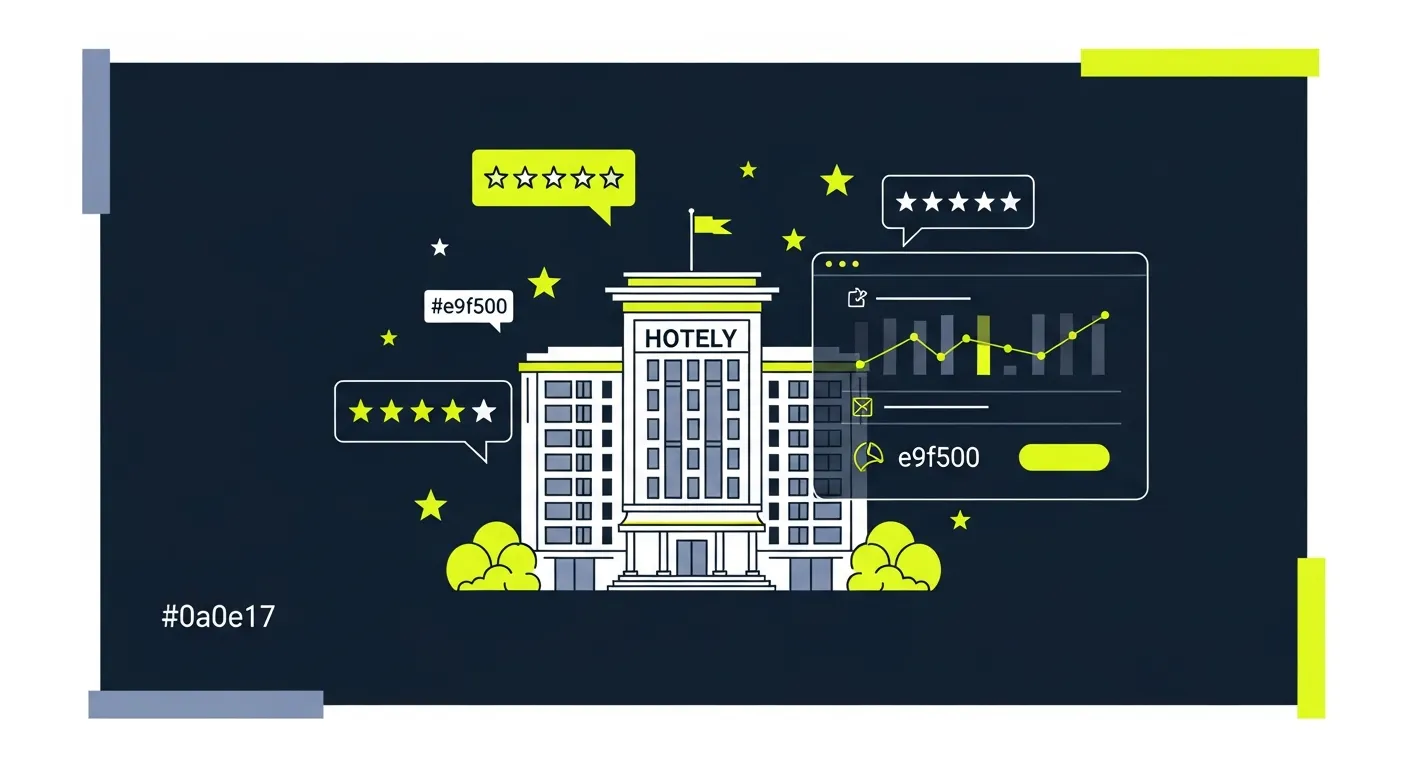
A single bad review on TripAdvisor or Google can cost a hotel thousands in lost bookings. Cornell Hospitality Research found that a one-point increase in a hotel’s online reputation score leads to an 11.2% increase in average daily rate (ADR) without sacrificing occupancy. For hoteliers, review management isn’t a marketing nice-to-have — it’s revenue management.
This guide covers everything hotel operators need to know about managing reviews effectively in 2026: why it matters more in hospitality than any other vertical, how to build a systematic approach, which platforms deserve your attention, and how software like Praising.ai can automate the heavy lifting.
Why Review Management Matters More for Hotels
Hotels face a unique review challenge that restaurants, retail stores, and service businesses don’t. A guest’s stay generates dozens of touchpoints over hours or days — check-in experience, room cleanliness, noise levels, breakfast quality, pool maintenance, staff interactions. Each touchpoint is a potential review trigger, positive or negative.
The Revenue Impact
Online reviews directly influence hotel revenue through three mechanisms:
Booking conversion rates. A Moz study showed that star ratings are the number-one factor travelers use when choosing between properties. A hotel at 4.3 stars converts browsers into bookers at roughly double the rate of a 3.8-star competitor at the same price point.
Rate elasticity. Hotels with stronger review profiles can charge more without losing occupancy. The Cornell research showed that for every 1% improvement in online reputation, RevPAR (revenue per available room) increases by up to 1.42%.
OTA ranking algorithms. Booking.com, Expedia, and TripAdvisor all use review recency, volume, and sentiment as ranking signals. A property with 50 fresh reviews from the past month outranks one with 200 reviews that are all six months old.
Platform Fragmentation
Hotels deal with more review platforms than almost any other business type:
- Google Business Profile — drives local pack visibility and Maps discovery
- TripAdvisor — still the dominant platform for leisure travelers researching destinations
- Booking.com — only verified guests can review, making these reviews highly trusted
- Expedia — similar verified-guest model to Booking.com
- Yelp — matters more in the US for boutique and independent properties
- Hotels.com — shares the Expedia ecosystem
- Google Hotels — a growing metasearch channel pulling reviews from multiple sources
Managing reviews across all these platforms manually is unsustainable for anything larger than a single-property boutique hotel.
Building a Hotel Review Management Strategy
Effective hotel review management has four pillars: collection, monitoring, response, and analysis. Most properties focus exclusively on response (because negative reviews feel urgent) and neglect the other three.
What separates the highest-rated properties from their competitors isn't luck — it's a consistent hospitality review management system that runs in the background even when the GM is focused elsewhere. The four pillars below give you that system.
Pillar 1: Review Collection
The hotels with the best online reputations don’t passively wait for reviews — they actively request them. A well-timed ask increases review volume by 3-5x compared to leaving it to chance.
Timing matters. Send review requests within 24-48 hours of checkout, while the experience is fresh. Guests who had a positive stay are most responsive the morning after checkout — they’re still in vacation mode and feeling generous.
Channel selection:
- Email works best for business travelers who booked direct
- SMS gets higher open rates for leisure guests (especially international travelers)
- QR codes at checkout or in the room work for walk-in guests
- Post-stay surveys that funnel satisfied guests toward public review platforms
Platform routing. Not every guest should be sent to the same platform. Route business travelers to Google (where they search for future stays), route leisure travelers to TripAdvisor (where they research destinations), and let OTA guests leave reviews naturally on the booking platform.
With Praising.ai, you can set up automated review requests that trigger based on checkout date and route guests to the platform where their review will have the most impact. The Google review link generator creates a direct URL you can embed in post-stay emails.
Pillar 2: Review Monitoring
You can’t manage what you don’t see. Hotels need real-time alerts when new reviews appear on any platform — not a weekly manual check of six different dashboards.
What to monitor:
- New reviews across all platforms (star rating + text)
- Rating trend changes (a 0.2 drop over a month signals a systemic issue)
- Competitor review activity (are they gaining faster than you?)
- Keyword sentiment (mentions of "breakfast," "noise," "staff," "cleanliness")
A reputation dashboard that aggregates all platforms into a single view saves hotel GMs hours per week. Instead of logging into TripAdvisor, then Google, then Booking.com separately, you see everything in one feed with priority flags on reviews that need immediate attention.
Pillar 3: Review Response
Every review deserves a response. Full stop. This isn’t optional for hotels — it’s expected by both the reviewing guest and future guests reading the conversation.
Response guidelines for hotels:
- Positive reviews (4-5 stars): Thank the guest by name, reference something specific about their stay, invite them back. Keep it under 100 words. Avoid copy-paste templates that make every response look identical.
- Negative reviews (1-2 stars): Acknowledge the issue without being defensive, explain what you’re doing to fix it, offer to continue the conversation offline. Never argue publicly. Never blame the guest.
- Mixed reviews (3 stars): Thank them for the positive feedback, address the concern directly, explain improvements made.
Response time targets:
- Negative reviews: within 24 hours (ideally same business day)
- Positive reviews: within 48-72 hours
- OTA reviews (Booking.com, Expedia): within the platform’s recommended window
AI-powered response drafting tools like Praising.ai generate personalized replies that reference the specific feedback in each review. You review and approve before publishing — the AI handles the time-consuming first draft, you add the human touch.
Pillar 4: Review Analysis
Individual reviews tell stories. Aggregated review data tells you where your operation is failing or succeeding.
What to track monthly:
- Average rating by platform (and the trend direction)
- Review volume (are you getting more or fewer reviews than last month?)
- Top complaint categories (room temperature, noise, Wi-Fi, breakfast, staff)
- Top praise categories (location, cleanliness, bed comfort, staff friendliness)
- Response rate and average response time
- Competitor comparison (your rating vs. the three closest competitors)
Use this data in operations meetings. If "breakfast" appears in 15% of negative reviews this month versus 5% last month, something changed in your F&B operation. Reviews are free, real-time quality audits from your actual guests.
Common Hotel Review Challenges (and How to Handle Them)
Fake or Malicious Reviews
Hotels are frequent targets for fake reviews — from disgruntled ex-employees, competitors, or guests trying to extort free stays. Each platform has a reporting mechanism:
- Google: Flag the review via your Business Profile, selecting "Conflict of interest" or "Fake/spam"
- TripAdvisor: Use the Management Center to report suspicious reviews. TripAdvisor has fraud detection algorithms but response times vary.
- Booking.com: Contact your area manager. Reviews from non-guests can be removed relatively quickly.
While waiting for removal, post a professional public response explaining that you have no record of this guest’s stay. Future readers will see your response and draw their own conclusions.
Seasonal Review Patterns
Hotels experience predictable review cycles. High season brings volume (more guests = more reviews) but also more complaints (overcrowding, noise, wait times). Low season brings fewer reviews but often higher ratings (better service ratios, quieter experience).
Plan your review solicitation efforts to counteract this. Increase your ask rate during slow periods to maintain review freshness. During peak season, focus solicitation on guests who had clearly positive experiences (upgrade recipients, loyalty members, special occasion stays).
Multi-Property Management
Hotel groups managing 5, 50, or 500 properties face a scale problem. Each property generates reviews across 5+ platforms. A 20-property group has 100+ review streams to monitor.
Centralized review management software becomes essential at scale. Key features for multi-property operations:
- Roll-up dashboards showing all properties ranked by current rating and trend
- Configurable alerts (only surface reviews below 3 stars for GM attention)
- Response templates customizable per property (your beachfront resort and your business hotel need different voices)
- Cross-property analysis (identifying systemic issues vs. property-specific problems)
Choosing Hotel Review Management Software
Not every review management tool is built for hotels. General-purpose platforms often lack hospitality-specific integrations — they don't connect to your PMS, can't handle OTA-specific review formats like Booking.com's numeric scoring, and treat a 30-room boutique property the same as a 500-room chain.
When evaluating hospitality review management software, look for these criteria:
PMS integration or checkout-triggered automation. The best time to request a review is within 24–48 hours of checkout. Software that triggers review requests automatically based on checkout date removes the manual step that most hotel teams never consistently execute.
OTA coverage beyond Google. Google-only tools miss the reviews that matter most on TripAdvisor, Booking.com, and Expedia. If your property gets 40% of its bookings through Booking.com, you need visibility into those reviews from the same dashboard you use for Google.
Response templates by scenario. Manually writing responses to every review doesn't scale. The best hotel review management platforms include templates for positive reviews, negative room complaints, slow service mentions, and maintenance issues — so your team can respond in 60 seconds rather than 10 minutes.
Multi-property roll-up. If you operate more than one property, you need consolidated reporting across locations without logging into separate accounts. Look for dashboards that rank properties by current rating and surface the ones that need attention.
How Praising.ai Helps Hotels Manage Reviews
Praising.ai was built for businesses that need to collect, monitor, respond to, and analyze reviews without dedicating a full-time employee to the task. For hotels, that means:
- Automated review requests timed to checkout, delivered via email or SMS, with smart platform routing
- Review monitoring for Google and Trustpilot in a single dashboard, with TripAdvisor, Booking.com and Expedia linked
- AI-drafted responses that reference specific guest feedback — you approve before publishing
- Reputation analytics tracking rating trends, review velocity, and sentiment categories over time
- Google review link generator for QR codes on key cards, in-room tablets, or receipt footers
The free plan lets you get started with basic review collection and monitoring. Paid plans starting at $19/month add AI responses, SMS requests, and analytics. See the full pricing breakdown, or visit our hotel reputation software page for a detailed look at hospitality-specific features.
FAQ
How quickly should hotels respond to negative reviews?
Within 24 hours is the standard expectation. Research from ReviewTrackers shows that 53% of customers expect businesses to respond to negative reviews within a week, but the hospitality industry holds itself to a higher standard. Same-business-day responses demonstrate that you take guest feedback seriously and are actively managing the experience.
Can hotels remove negative Google reviews?
You cannot directly remove a Google review unless it violates Google’s content policies (spam, fake engagement, off-topic, harassment). You can flag reviews for removal through your Google Business Profile. If the review is legitimate feedback from a real guest, your best strategy is a professional response plus increased review volume to push down the impact on your average rating.
What’s a good review response rate for hotels?
100% is the target. Every review — positive, negative, and neutral — should receive a response. STR Global data shows that hotels responding to over 75% of reviews see measurably higher booking conversion rates than properties responding to fewer than 25%. Guests interpret response rates as a signal of how much a hotel cares about the guest experience.
How many reviews does a hotel need to rank well on Google?
There’s no magic number, but review velocity matters more than total count. A hotel with 20 reviews from the past month typically outranks one with 200 reviews that are all over a year old. For local pack visibility, aim for at least 5 new Google reviews per month as a baseline, with more needed in competitive markets.
Should hotels respond to positive reviews too?
Absolutely. Responding to positive reviews encourages future guests to leave their own feedback (they see that the hotel actually reads and values reviews). It also gives you an opportunity to mention specific amenities or upcoming events, which provides fresh keyword-rich content on your review profiles. Keep positive responses genuine and brief — a sentence or two thanking the guest and inviting them back.
Frequently asked questions
How quickly should hotels respond to negative reviews?
Within 24 hours is the standard expectation. Research from ReviewTrackers shows that 53% of customers expect businesses to respond to negative reviews within a week, but the hospitality industry holds itself to a higher standard. Same-business-day responses demonstrate that you take guest feedback seriously and are actively managing the experience.
Can hotels remove negative Google reviews?
You cannot directly remove a Google review unless it violates Google's content policies (spam, fake engagement, off-topic, harassment). You can flag reviews for removal through your Google Business Profile. If the review is legitimate feedback from a real guest, your best strategy is a professional response plus increased review volume to push down the impact on your average rating.
What's a good review response rate for hotels?
100% is the target. Every review — positive, negative, and neutral — should receive a response. STR Global data shows that hotels responding to over 75% of reviews see measurably higher booking conversion rates than properties responding to fewer than 25%.
How many reviews does a hotel need to rank well on Google?
There's no magic number, but review velocity matters more than total count. A hotel with 20 reviews from the past month typically outranks one with 200 reviews that are all over a year old. Aim for at least 5 new Google reviews per month as a baseline.
Should hotels respond to positive reviews too?
Absolutely. Responding to positive reviews encourages future guests to leave their own feedback and gives you an opportunity to mention specific amenities or upcoming events, providing fresh keyword-rich content on your review profiles.
Ready to grow?
Turn happy customers into 5-star reviews
Praising.ai automates review requests for Google, Trustpilot and the other review sites you use. Businesses see an average 3x increase in reviews within 30 days.
Written by
· 106 articlesMarcus Webb
Reputation Management Specialist
Marcus has spent over a decade helping small and medium businesses understand online reviews and local search. He writes about Google Business Profile, review automation, and the mechanics of reputation management—always from the angle of what actually moves the needle for independent businesses.
View all articlesGet weekly review tips
Actionable strategies to grow reviews and revenue, straight to your inbox.
No spam. Unsubscribe anytime.
Get more 5-star reviews on autopilot
Praising.ai automates review requests for Google, Trustpilot and the other review sites you use — free to start, no credit card required.
Start FreeFree 14-day trial