Best Review Software in 2026: 7 Tools Compared

TL;DR
The best review software for most small businesses is Praising.ai — it offers a Forever Free plan with no credit card required, AI-drafted reply suggestions, and multi-platform monitoring. Birdeye and Podium suit larger teams and enterprises. The right pick depends on your business size, budget, and whether you need review generation, monitoring, or both.
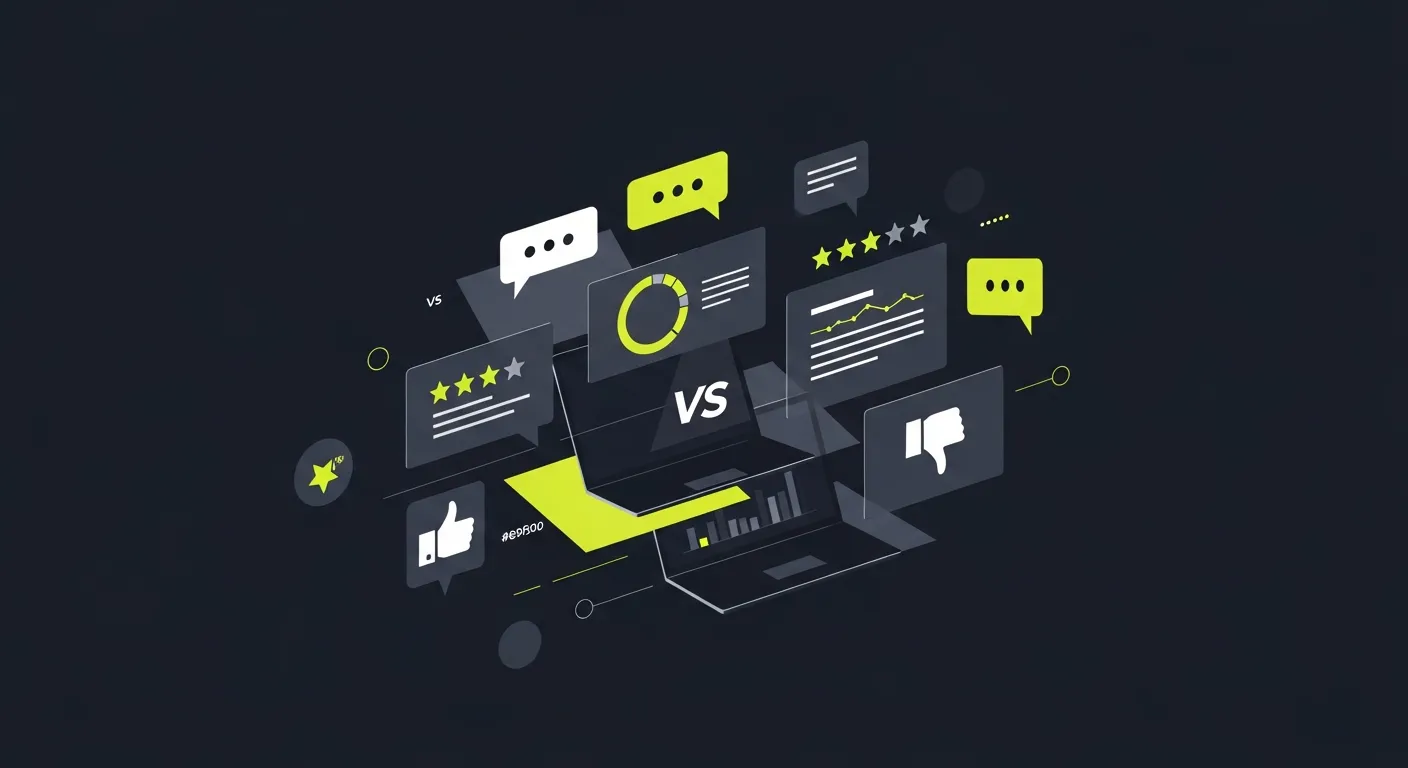
Review software helps businesses collect more reviews, monitor what customers say across Google, Yelp, Facebook, and dozens of other platforms, and respond to feedback without switching between browser tabs. The category has grown fast — there are now dozens of tools, and the pricing gap between the cheapest and the most expensive is wider than most people expect.
This guide covers the seven best review software platforms in 2026. For each one, I've noted who it's best for, what it actually costs, and what it does well or poorly. At the end there is a comparison table and a short FAQ.
What review software actually does
Before comparing tools, it's worth being precise about what the category covers — because vendors often bundle very different capabilities under the same label.
Review generation means sending automated requests to customers by SMS, email, or WhatsApp asking them to leave a review. Most tools send the request immediately after a purchase or service visit. The better ones let you customize the message, set send timing, and choose which platform (Google, Trustpilot, industry-specific sites) to direct customers toward.
Review monitoring means watching incoming reviews across multiple platforms and centralizing them in one dashboard so you don't miss a new rating on a platform you rarely check. Most tools support Google Business Profile, Facebook, Yelp, and Tripadvisor at minimum.
Review response means either manually replying to reviews from a central inbox, or using AI to draft responses that you approve before they go live. The difference between typing each reply from scratch and approving a draft in two clicks is significant when you're handling dozens of reviews per week.
Analytics and reporting means dashboards that show your rating trend over time, sentiment analysis of review text, and competitor benchmarking.
Not every tool does all four equally well. Some are primarily generation-focused; others are built around monitoring and response. The best choice depends on which capability matters most to your business.
The 7 best review software tools in 2026
- Praising.ai — Best for small businesses and local services
Praising.ai is built around a simple premise: a local business should be able to get more Google reviews without a dedicated marketing team. The free plan supports review generation, Google review monitoring, and AI-assisted response drafting with no credit card required.
What it does well:
- Forever Free plan covers review requests by SMS and email, Google and Facebook monitoring, and AI reply suggestions
- AI drafts feel contextual — they match the tone of the original review and avoid the robotic filler phrases common in cheaper tools
- Clean onboarding: connect your Google Business Profile and send your first review request in under five minutes
- Multi-platform monitoring covers Google, Facebook, Yelp, Trustpilot, and 20+ other platforms on paid plans
- The review widget embeds on any website and updates automatically as new reviews come in
What it doesn't do (yet):
- No dedicated enterprise tier for chains with 50+ locations managing thousands of monthly reviews
- Reporting is functional but not as deep as Birdeye's analytics suite
Pricing: Forever Free plan available; paid plans start at $29/month per location with a 14-day trial (card required for paid plans).
Best for: local service businesses, restaurants, dental and healthcare practices, and small agencies that want an affordable, no-friction starting point.
- Birdeye — Best for multi-location enterprises
Birdeye has been in the review management space since 2012 and is one of the most recognized names in the category. Its strength is scale: the platform is designed for businesses with many locations that need centralized review monitoring, automated request workflows, and detailed cross-location analytics.
What it does well:
- Excellent multi-location management — roll up reviews from 100+ locations into a single dashboard
- Deep integrations with major CRMs, point-of-sale systems, and practice management software
- Competitor benchmarking shows how your average rating compares with nearby businesses on the same platforms
- Webchat, surveys, and social messaging bundled into the platform for businesses that want one vendor
What it doesn't do well:
- Pricing is custom and typically starts at $299/month for the base plan — not suitable for solo operators or single-location businesses on a tight budget
- Onboarding requires a sales call; there is no self-serve trial
- Some users report that support quality decreases after the initial onboarding period
Pricing: Custom pricing, typically $299–$499/month for small configurations. Volume discounts for enterprise customers.
Best for: franchise groups, healthcare networks, automotive dealerships, and any business managing reviews across 5+ locations.
- Podium — Best for SMS-heavy review generation
Podium built its reputation around text messaging. The core product is an inbox that combines SMS, Google Messages, Facebook Messenger, and website chat into a single thread view, with review requests woven into the conversation flow.
What it does well:
- Conversational review requests feel natural because they come from a real business phone number via text
- The unified inbox is genuinely useful for businesses that communicate with customers across multiple channels
- AI-generated response suggestions integrate directly into the inbox
- Payments by text (Podium Payments) adds a revenue feature that most review tools don't attempt
What it doesn't do well:
- Pricing starts around $399/month — significantly above most competitors
- The suite is wide (reviews, payments, messaging) but review management specifically is not deeper than alternatives at a third of the price
- Businesses that don't need the full communication suite often find they're paying for features they don't use
Pricing: Starts at approximately $399/month; pricing varies by configuration.
Best for: service businesses with active customer conversations by text — auto shops, home services, medical practices — that want reviews as part of a broader messaging stack.
- Grade.us — Best for agencies managing multiple clients
Grade.us is built around the agency use case: a review management tool where the operator is a marketing or reputation agency managing review workflows for multiple client businesses, each with separate branding.
What it does well:
- White-label client reports with your own branding
- Per-client review funnels with client-specific templates and platform targeting
- Clear per-location pricing that makes it straightforward to build an agency margin on top
- Funnel builder lets you route reviewers to different platforms based on their rating
What it doesn't do well:
- The interface is functional but dated compared with newer tools
- AI reply features are limited relative to Praising.ai or Birdeye
- Not a strong choice for a business managing its own reviews directly
Pricing: Plans start at $110/month for 3 locations. Agency plans scale up from there.
Best for: digital marketing agencies, SEO firms, and reputation management consultants managing reviews on behalf of clients.
- Trustpilot — Best for ecommerce and D2C brands
Trustpilot is not a review management platform in the traditional sense — it is a consumer review site that also offers business tools. If you sell online and your customers are already on Trustpilot, the business plan lets you collect, display, and respond to reviews on the platform.
What it does well:
- High consumer trust: Trustpilot reviews carry SEO weight and appear in Google's rich results for brand searches
- Review invitations can be triggered automatically by your ecommerce platform (Shopify, WooCommerce, Magento)
- Trustpilot's star rating can appear as review snippets in Google paid and organic results
- Free plan allows 100 invitation emails per month
What it doesn't do well:
- Reviews live on Trustpilot's platform, not on your own site or Google Business Profile — it doesn't help with Google star ratings
- A negative review on Trustpilot is more visible than a negative review on most other platforms because the profile page ranks for your brand name in Google
- Business tools are expensive if you need advanced features like custom review invitations or competitor data
Pricing: Free plan available; paid plans start at approximately $219/month for the standard plan.
Best for: ecommerce brands and D2C companies that sell online and want third-party credibility alongside their Google reviews.
- ReviewTrackers — Best for analytics-heavy teams
ReviewTrackers focuses on monitoring and analytics rather than review generation. It covers the widest range of review sources of any platform on this list — more than 100 review sites — and presents trend data, sentiment analysis, and location comparisons in a polished dashboard.
What it does well:
- Monitors the most sources of any tool in this list: Google, Facebook, Yelp, Tripadvisor, Healthgrades, Avvo, G2, Capterra, and 90+ more
- Sentiment analysis breaks down what customers say about specific aspects (food quality, wait time, staff friendliness) rather than just star ratings
- Competitor tracking for up to 10 competitors per location
- Location-level reports are shareable with managers who don't need access to the full platform
What it doesn't do well:
- Review generation (sending requests to customers) is not the core focus — the tools exist but feel bolted on
- Pricing is at the higher end for what it offers on the generation side
- Best value for businesses with large volumes of inbound reviews to analyze, not businesses trying to generate their first 50
Pricing: Custom pricing starting around $119/month per location.
Best for: multi-location brands, hotel groups, and healthcare systems with high review volumes that need to understand patterns across locations and competitors.
- NiceJob — Best for service businesses on a budget
NiceJob is a review and referral platform aimed at small service businesses: plumbers, electricians, landscapers, cleaners. It automates review requests via SMS and email and connects to a simple website builder for businesses that don't have a site.
What it does well:
- Simple, no-configuration setup — connect your Google Business Profile and it starts sending requests automatically based on job completions
- Integrations with ServiceTitan, Jobber, Housecall Pro, and other field-service platforms so reviews are triggered from your job management software
- Referral campaign tools alongside review generation
- Website builder included on higher-tier plans
What it doesn't do well:
- Monitoring coverage is limited to Google and Facebook — fine for most local service businesses but not enough for businesses on review-heavy platforms like Healthgrades or G2
- AI response drafting is minimal compared with Praising.ai or Birdeye
- No free plan; the entry plan starts at $75/month
Pricing: Plans start at $75/month. A free 14-day trial is available.
Best for: home service businesses (plumbing, HVAC, cleaning, landscaping) that want automated review generation integrated with their field service software.
Comparison table
| Tool | Starting price | Free plan | AI replies | Multi-platform | Best for |
|---|---|---|---|---|---|
| Praising.ai | $29/mo | ✓ Yes | ✓ Yes | ✓ 20+ platforms | SMBs, local businesses |
| Birdeye | ~$299/mo | ✗ No | ✓ Yes | ✓ 200+ sources | Multi-location enterprise |
| Podium | ~$399/mo | ✗ No | ✓ Yes | ✓ Yes | SMS-first businesses |
| Grade.us | $110/mo | ✗ No | Limited | ✓ Yes | Agencies |
| Trustpilot | Free / $219/mo | ✓ Limited | ✗ No | ✗ Own platform only | Ecommerce / D2C |
| ReviewTrackers | ~$119/mo/loc | ✗ No | Limited | ✓ 100+ sources | Analytics-focused teams |
| NiceJob | $75/mo | ✗ No | Limited | Limited | Home service businesses |
How to choose the right review software
If you are a single-location small business and your primary goal is getting more Google reviews, start with Praising.ai's free plan. You can send your first review request the day you sign up, and you'll see which features you actually need before paying for anything.
If you manage 5+ locations and need a consolidated view of every review across all locations with detailed analytics, Birdeye or ReviewTrackers are built for that scale. Expect to pay accordingly.
If your customers primarily interact with you by text message — auto repair, dental, healthcare — Podium's text-native review requests convert better than email-only tools at the cost of a higher monthly fee.
If you run a marketing agency managing reviews for multiple clients and need white-label reporting, Grade.us has the cleanest per-client billing and branding structure.
If you sell online and care about appearing on Trustpilot's consumer site specifically, Trustpilot's business plan is the right tool — but pair it with a separate tool for Google Business Profile reviews.
If you run a home service business using Jobber, ServiceTitan, or Housecall Pro, NiceJob's integrations with those platforms mean review requests happen automatically when you close a job, without any manual steps.
For most local businesses starting from zero, the right move is to start with a free plan, measure what actually converts, and upgrade once you know which features drive results.
Frequently Asked Questions
What is review software?
Review software is a category of business tools that help companies collect more customer reviews, monitor reviews across multiple platforms (Google, Yelp, Facebook, Tripadvisor, and others) from a single dashboard, and respond to reviews — often with AI-generated drafts. The category overlaps with online reputation management software but is more focused on the review-specific workflow: requesting, monitoring, and responding.
Is free review software worth using?
Free plans are worth starting with because they let you measure how many review requests actually convert into reviews before committing to a monthly fee. Praising.ai's forever-free plan includes Google and Facebook monitoring and AI reply suggestions — which covers the most important workflows for most local businesses. Upgrade when the volume of reviews or locations outgrows what the free plan supports.
How does review software get customers to leave reviews?
Most platforms send an SMS or email to the customer shortly after a purchase or service visit. The message includes a direct link to the review page so the customer doesn't have to search for the business on Google or Yelp. Some tools also send a follow-up message a few days later if the customer hasn't left a review yet. The timing, message, and platform are usually configurable.
Can review software remove negative reviews?
No. Review software cannot remove negative reviews — only the platform that hosts the review (Google, Yelp, etc.) can remove a review, and only if it violates their policies. Review software helps you respond to negative reviews professionally and can flag reviews that may violate platform policies for manual reporting, but it has no direct ability to delete reviews. Be cautious of any tool that claims otherwise.
What is the best review software for Google reviews specifically?
For Google Business Profile reviews specifically, Praising.ai is designed around the Google review workflow: connecting your GBP account, monitoring incoming Google reviews, sending requests that link directly to your Google review page, and drafting AI replies that are ready to post on Google. Most of the tools in this list support Google, but Praising.ai's free plan makes it the lowest-risk starting point for businesses focused primarily on Google.
Ready to grow?
Turn happy customers into 5-star reviews
Praising.ai automates review collection across Google, Trustpilot, Yelp, and 20+ platforms. Businesses see an average 3x increase in reviews within 30 days.
Get weekly review tips
Actionable strategies to grow reviews and revenue, straight to your inbox.
No spam. Unsubscribe anytime.
Get more 5-star reviews on autopilot
Praising.ai automates review collection across Google, Trustpilot, and 20+ platforms — no credit card required.
Start FreeFree 14-day trial