How to Respond to Negative Google Reviews: Expert Guide 2026

TL;DR
Responding to negative Google reviews within 24-48 hours with empathy and accountability directly shapes whether potential customers choose you over competitors. Lead with validation, skip the excuses, and move resolution to a private channel. Done right, a strong response can turn a dissatisfied reviewer into your most loyal customer.
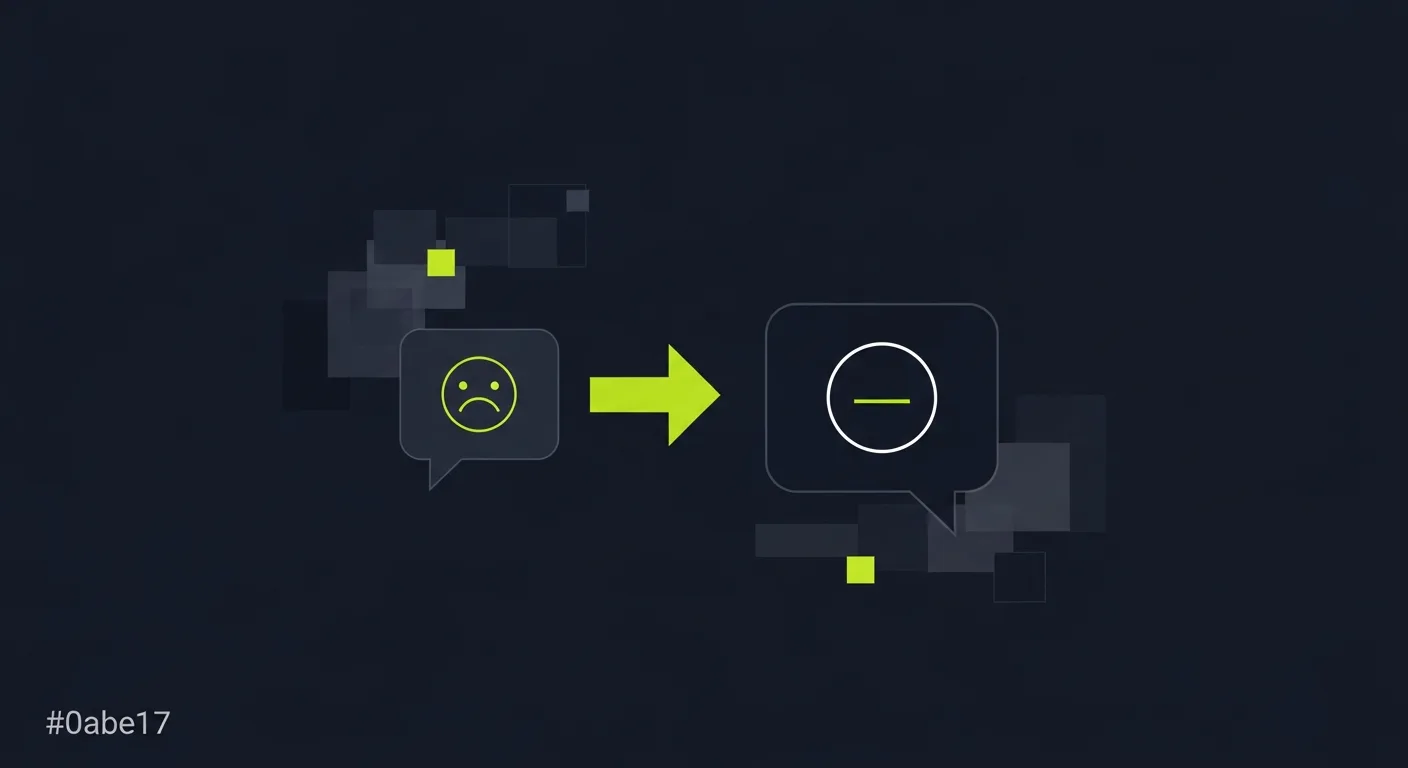
Negative Google reviews sting. But how you respond often matters more than the review itself. 73% of consumers read business responses to reviews before making a purchase decision. A thoughtful response can transform an angry customer into a loyal advocate. More importantly, it shows potential customers how you handle problems. This guide teaches you exactly how to respond to negative reviews professionally and effectively.
Why Responding to Negative Reviews Matters
Ignoring bad reviews sends the wrong message. Potential customers see silence as indifference or guilt. Here's what happens when you respond properly: builds trust by showing you care about customer experience, improves SEO since Google favors businesses that engage with reviews, increases conversions as 89% of consumers read business responses, shows professionalism that sets you apart from rivals who ignore feedback, and creates learning chances since negative feedback reveals blind spots. Studies show businesses that respond to reviews see a 12% increase in customer retention and a 31% boost in revenue.
The Psychology Behind Negative Review Responses
Understanding why customers leave negative reviews helps you craft responses that actually land. Most upset customers want three things: to feel heard, to receive acknowledgment that their experience was valid, and to believe that no one else will face the same problem.
Research from customer service studies reveals a clear pattern:
- Validation matters most: 68% of upset customers say they just want someone to listen and acknowledge what went wrong — not excuses or explanations
- Empathy over explanation: Customers respond better to "I understand why that was frustrating" than to detailed breakdowns of what happened operationally
- Public vs. private resolution: A brief public acknowledgment paired with an invitation to discuss privately outperforms trying to fully resolve the issue in the public thread
- The service recovery paradox: Customers who experience a problem that gets resolved exceptionally well often become more loyal than customers who never had a problem at all
This psychology should shape every response you write. Lead with empathy. Validate the experience without over-explaining. Then pivot to resolution through a private channel. Responding to negative reviews on Google isn't just damage control — it's one of the most impactful touchpoints you have with potential customers who are actively comparing you to competitors.
The Golden Rules of Review Response
Before diving into specific strategies, master these fundamental principles:
Respond Quickly
Reply within 24-48 hours. Speed shows you're attentive and care about customer concerns. Late responses feel like damage control.
Stay Professional Always
No matter how unfair the review feels, maintain a calm, professional tone. Your response is public and permanent.
Acknowledge the Issue
Don't dismiss or cut complaints. Acknowledge what went wrong, even if you disagree with details.
Take Responsibility
Own your part without making excuses. Customers want accountability, not justifications.
Offer Solutions
Show how you'll fix the problem or prevent it from happening again.
The 5-Step Response Formula
Use this proven framework for every negative review response:
Step 1: Thank and Acknowledge
Start by thanking the reviewer for their feedback. Acknowledge their experience without agreeing or disagreeing with specifics. Example: "Thank you for taking the time to share your experience, John."
Step 2: Apologize Genuinely
Offer a sincere apology for their negative experience. Keep it brief and heartfelt. Example: "I'm sorry your visit didn't meet your standards."
Step 3: Take Responsibility
Accept accountability without making excuses or blaming external factors. Example: "We clearly fell short of our usual service standards."
Step 4: Explain and Correct
Briefly address the issue and outline steps you're taking to prevent similar problems. Example: "We've retrained our staff on proper order handling steps."
Step 5: Invite Further Discussion
Offer to continue the conversation offline to resolve any remaining concerns. Example: "Please contact me directly at [email] so we can make this right."
Response Templates by Situation
Service Quality Complaints
"Hi [Name], thank you for sharing your feedback about your recent experience. I sincerely apologize that our service didn't meet your standards. You're absolutely right that we should have handled your request more efficiently. We've reviewed our steps with the team to ensure this doesn't happen again. I'd love the chance to make this right - please reach out to me at [email] when you have a moment.
- [Your Name], [Title]"
Product Quality Issues
"Thank you for bringing this to our attention, [Name]. I'm sorry the product you received wasn't up to our quality standards. This isn't the experience we want any customer to have. We've identified the issue in our quality control process and taken steps to prevent similar problems. Please contact us at [email] so we can arrange a replacement and full refund.
- [Your Name], [Title]"
Staff Behavior Concerns
"Hi [Name], I appreciate you taking the time to share this feedback. I'm deeply sorry about your contact with our team member. This behavior doesn't reflect our values or training standards. We've addressed this directly with our staff and reinforced our customer service standards. I'd welcome the chance to personally ensure your next experience is much better - please email me at [email].
- [Your Name], [Title]"
Pricing Disputes
"Thank you for your feedback, [Name]. I understand your frustration about the pricing, and I should have communicated our rates more clearly upfront. While our pricing reflects the quality and service we provide, I recognize we could have been more transparent. I'd be happy to discuss your specific concerns directly - please reach out to me at [email].
- [Your Name], [Title]"
Timing and Wait Time Issues
"Hi [Name], thank you for sharing your experience. I sincerely apologize for the long wait time during your visit. You're right that we should have communicated the delay and managed standards better. We've set up a new system to track wait times and keep customers informed. I'd love to invite you back to show you the improvements we've made - please contact me at [email].
- [Your Name], [Title]"
Industry-Specific Response Strategies
Different industries face different kinds of complaints — and the right response strategy varies by sector. Here's how to tailor your approach when responding to negative reviews on Google for your specific industry.
Restaurants and Food Service
Restaurant complaints cluster around food quality, wait times, and staff attitude. Responding well means:
- Acknowledging that dining experiences are personal and emotional, not just transactional
- Avoiding any defense of specific menu choices or kitchen procedures
- Offering a concrete invitation back rather than a generic apology
- Keeping the response warm, human, and signed by a named person (chef or manager)
Template: "Hi [Name], I'm sorry your experience last night didn't live up to what we aim for. Our team has noted your feedback about [specific dish/wait time/staff interaction] and we're addressing it directly. I'd love for you to give us another chance — please reach out to me at [email] and I'll personally make sure your next visit is exactly what it should be. – [Manager Name]"
Healthcare and Medical Practices
Healthcare responses require extra care around patient privacy laws. Never confirm or deny a patient relationship in your public response:
- Keep responses brief, warm, and non-specific
- Immediately invite a private conversation — do not engage with clinical details publicly
- Demonstrate genuine compassion without disclosing anything protected
Template: "Thank you for sharing your experience. Patient wellbeing is our highest priority, and we take all feedback seriously. Please contact our patient liaison at [email] so we can address your concerns directly and confidentially. We're committed to making things right."
Retail and E-Commerce
Retail reviews typically focus on product quality, shipping delays, or returns. Customers reading these reviews want to see that you actually fix problems:
- Offer a concrete resolution (replacement, refund, or store credit) in the public response itself
- Reference your return/resolution process briefly to reassure future buyers
- Avoid any tone that suggests the customer's complaint is unusual or unreasonable
Template: "Hi [Name], I'm sorry the [product] arrived in that condition — that's not acceptable and I want to fix it immediately. Please email us at [support email] with your order number and we'll ship a replacement right away, no return required. Thank you for letting us know."
Professional Services (Law, Accounting, Consulting)
Professional service reviews often center on perceived value or communication gaps. Confidentiality limits what you can say, but you can still respond professionally:
- Acknowledge the concern without engaging in specifics that could breach client confidentiality
- Emphasize your track record and commitment to communication
- Keep the tone dignified — your future clients are reading this to assess your professionalism
Template: "Thank you for your feedback, [Name]. While I'm unable to discuss the details of our work together publicly, I take your experience seriously and would welcome a direct conversation. Please reach out to me at [email] — I'm committed to making sure every client feels fully served."
Hospitality (Hotels, Spas, Vacation Rentals)
Hospitality reviews directly drive booking decisions for future guests who are actively comparing options. Your response should speak to both the reviewer and future readers:
- Describe improvements made since the issue occurred (only if they're real)
- Invite the reviewer back with something concrete, not just words
- Acknowledge that a stay is a significant investment of time and money
Template: "Hi [Name], I'm genuinely sorry your stay didn't meet the standard we work hard to maintain. Since your visit, we've [specific improvement]. I'd love the opportunity to show you the difference — please email me at [email] and I'll personally ensure your next stay exceeds expectations."
Legal Considerations When Responding to Negative Reviews
A few guardrails to keep in mind before you hit publish on any review response:
Defamation risk: If a review contains provably false statements of fact, you may have legal recourse. However, arguing publicly about it almost always makes things worse for your reputation. Document the review, consult legal counsel if needed, and keep your public response measured and factual.
HIPAA in healthcare: Never confirm that someone was a patient or reveal any details about care in your response. Even language like "I'm sorry you felt that way about your treatment" can imply a patient relationship. Stick to general empathy and an invitation to contact you privately.
Consumer Review Fairness Act (US): This law prohibits businesses from penalizing customers for leaving honest reviews — including through legal threats. Never threaten legal action in a public review response. Even if the review is demonstrably false, that threat will harm your reputation far more than the original post.
Platform terms of service: Google, Yelp, and Tripadvisor all prohibit offering incentives in exchange for removing or revising reviews. Never offer a discount, refund, or gift in a public response contingent on review removal — that puts your listing at risk.
Dealing with Unfair or Fake Reviews
Sometimes you'll encounter reviews that seem unfair, inaccurate, or potentially fake. Here's how to handle them:
For Inaccurate Reviews
Address factual errors politely without being defensive: "Thank you for your feedback, [Name]. I want to clarify a few details about your experience. Our records show [brief factual correction]. Regardless, I'm sorry you felt disappointed, and I'd welcome the chance to discuss this further at [email]."
For Suspected Fake Reviews
Respond professionally while subtly indicating the review may not be real: "Thank you for taking the time to leave this feedback. We don't have a record of serving a customer with your name on the date mentioned, so we'd love to connect directly to understand your experience better. Please reach out to us at [email]." Never directly accuse someone of leaving a fake review in your public response.
When to Flag Reviews
Report reviews to Google that contain offensive language or personal attacks, are clearly fake or spam, violate Google's review policies, or include rival advertising. Use Google's flag system, but don't rely on it as your only response strategy.
What NOT to Do When Responding
Avoid these common mistakes that make bad situations worse:
Don't Get Defensive
Never argue with reviewers or justify your actions aggressively. It makes you look unprofessional and unreasonable. Wrong: "You're completely wrong about what happened. Our staff would never do that." Right: "I'm sorry you had this experience. Let me look into this further."
Don't Blame the Customer
Even if the customer made mistakes, don't point fingers publicly. Wrong: "If you had read our policies, you would have known about our cancellation fee." Right: "I apologize for any confusion about our cancellation policy. Let's discuss how we can resolve this."
Don't Share Private Information
Never reveal customer details or specific transaction data in public responses.
Don't Use Generic Templates
Customers can spot copy-paste responses right away. Customize each reply.
Don't Ignore Multiple Negative Reviews
If you're getting several bad reviews about the same issue, address the pattern directly and explain your improvement plan.
Advanced Response Strategies
Turn Critics into Advocates
The best review responses can actually convert angry customers into loyal fans: exceed standards by offering more than they're asking for, follow up personally by checking back after resolving their issue, share improvements by letting them know how their feedback led to positive changes, and invite them back by giving them a reason to try you again.
Use Reviews for Business Intelligence
Negative reviews reveal patterns you might miss otherwise: common complaints show what issues appear repeatedly, service gaps reveal where you're always falling short, training needs identify which staff members need extra support, and process improvements highlight what systems could work better. Track review themes monthly and adjust operations accordingly.
Use Positive Aspects to Your Advantage
Even negative reviews often contain positive elements. Acknowledge them: "Thank you for noting that our food quality was excellent, even though the service was slow. We're working on our timing to match our culinary standards."
The 48-Hour Rule for Emotional Reviews
When a review triggers a strong emotional reaction, force yourself to wait before responding. Write your draft response, save it, and come back 48 hours later. What felt like a reasonable response in the heat of the moment often reads as defensive or passive-aggressive with fresh eyes. The 48-hour rule doesn't mean waiting 48 hours to respond publicly — it means separating the drafting from the publishing. Draft immediately (so the details are fresh), then revisit and edit before posting. Most business owners who follow this approach report their final responses are 60-70% shorter and far more effective than their first drafts.
Real-World Recovery Examples
Abstract advice only goes so far. Here are anonymized cases from actual businesses that turned negative review situations around, and what made their approach work.
Case 1: The Restaurant With a Health Code Complaint
A diner left a 1-star review claiming they saw a rodent near the kitchen entrance. The owner's first instinct was to deny it since their last inspection was clean. Instead, they responded within 4 hours: acknowledged the concern, explained they brought in a pest control company for an emergency inspection that same afternoon, and posted photos of the clean inspection certificate in a follow-up comment. The reviewer updated to 3 stars and added "respect for how they handled this."
What made it work: Speed, tangible action (not just words), and evidence. Future diners reading this see a business that takes hygiene concerns seriously rather than dismissing them.
Case 2: The Dentist Accused of Overbilling
A patient left a detailed 1-star review alleging unnecessary procedures were recommended. The practice couldn't discuss specifics publicly due to patient privacy. Their response: "Thank you for sharing your concern. Patient trust matters deeply to us. We're unable to discuss specific care details publicly, but our Patient Advocate is available at [phone] to walk through your treatment plan and billing in detail. We also offer a no-cost second opinion through our partner network." The review stayed at 1 star, but the practice owner reported that two new patients mentioned reading this exchange and feeling reassured by the response's professionalism.
What made it work: They couldn't win the argument publicly. Instead, they demonstrated the kind of measured, patient-first communication that prospective patients want to see from their healthcare provider.
Case 3: The SaaS Company Facing a Feature Complaint
A user left a negative review on G2 about missing integrations. Rather than a generic "we're always improving" response, the product manager replied with specifics: "You're right that we don't support [integration] yet. I've added your vote to our internal tracker — this is our 4th most requested integration. We're targeting Q2 for this. I'll email you personally when it ships." When the feature launched two months later, the user updated to 4 stars and added "they actually followed through."
What made it work: Specificity and follow-through. The response was honest about the gap, included a timeline, and the personal follow-up showed the customer their feedback mattered beyond the PR response.
Case 4: The Hotel With a Noise Complaint
A guest left a 2-star review about construction noise next door that ruined their morning sleep. The hotel couldn't control neighboring construction. Their response: "I'm sorry the neighboring construction disrupted your stay. You're right — it's frustrating, especially when you're on vacation. We should have warned you at check-in and offered a room on the opposite side of the building. We've now added construction alerts to our booking confirmation emails and retrained front desk staff to proactively offer room switches when noise is expected. Your next stay is on us — please email [direct email] when you're ready to rebook." The guest updated to 4 stars.
What made it work: They didn't deflect blame to the construction company. They acknowledged what was within their control (communication, room placement) and offered a concrete systemic fix plus a meaningful gesture.
Case 5: The Auto Shop With a Misdiagnosis Claim
A customer left a 1-star review saying the shop charged for a repair that didn't fix the problem. The owner replied same-day: "Hi Mark, I pulled up your service record and I see what happened. The initial diagnosis pointed to the alternator, and the test confirmed it at the time. It sounds like there's a secondary issue that wasn't showing symptoms during that first visit. Bring it back this week and we'll diagnose the remaining issue at no charge. If our original repair turns out to have been unnecessary, I'll credit the full amount toward the correct fix." Mark updated to 4 stars after the follow-up visit.
What made it work: Transparency about the diagnostic process, no defensiveness about "being right," and a concrete financial commitment that removed the customer's risk.
Tools to Simplify Review Management
Managing review responses across multiple platforms gets complex quickly. Consider review management tools that track your Google and Trustpilot reviews, send an alert for every new review, provide response templates and suggestions, track response rates and customer satisfaction metrics, and generate insights from review data. Platforms like Praising.ai use AI to help craft professional responses and track your online reputation automatically.
Measuring Response Effectiveness
Track these metrics to improve your review response strategy:
Response Rate
Aim to respond to 100% of negative reviews within 48 hours.
Customer Follow-Up
Track how many upset customers contact you privately after your public response.
Review Rating Recovery
Track if customers update their reviews after you address their concerns.
Overall Rating Trends
Watch your average rating over time to see if response efforts improve perception.
Conversion Impact
Measure if improved review responses correlate with increased bookings or sales.
Industry Benchmarks Worth Tracking
How do your response efforts stack up? Here's what strong performers typically achieve across industries:
Response rate: Top-performing local businesses respond to 90%+ of all reviews (positive and negative). For negative reviews specifically, anything below 100% is a missed opportunity since those are the threads potential customers read most closely.
Response time: Median response time for businesses that rank in Google's local pack is under 24 hours. Businesses responding within 4 hours see roughly 15% higher rates of review updates where reviewers increase their original star rating after resolution.
Review recovery rate: Around 30% of 1-2 star reviewers will update their rating after a genuine resolution effort. Don't expect 100% — some people never revisit their reviews regardless of outcome. The goal isn't getting updates; it's demonstrating responsiveness to everyone reading.
Rating trajectory: Businesses that maintain consistent response practices typically see their average rating increase by 0.3-0.5 stars over 6-12 months. This isn't from manipulating reviews but from the compounding effect of visible responsiveness attracting better-fit customers who then leave better reviews.
Conversion signal: Review responses visible on Google Business Profile pages affect click-through rates measurably. Listings with owner responses to negative reviews see roughly 16% more direction requests and phone calls than those without visible responses, according to local SEO studies.
Track these numbers monthly. If your response rate drops below 80% or your average response time stretches past 72 hours, your review management process needs attention. A dedicated review management platform can automate the monitoring and alerting so nothing slips through.
Creating a Review Response Workflow
Build a systematic approach:
Daily Monitoring
- Check Google My Business dashboard
- Set up Google alerts for your business name
- Track industry review sites
Response Assignment
- Designate specific team members to handle responses
- Create escalation steps for serious issues
- Set response time targets (24-48 hours maximum)
Quality Control
- Review all responses before publishing
- Maintain consistent tone and messaging
- Document lessons learned from each contact
Building Long-Term Reputation Resilience
Responding to negative reviews is reactive. Build proactive systems too: encourage more positive reviews since the best defense against negative reviews is an abundance of positive ones, making it easy for happy customers to share their experiences. Improve based on feedback by using review insights to genuinely improve your business, as customers notice when you act on their suggestions. Train your team to ensure everyone understands how their actions impact online reviews, since good service prevents bad reviews. Track rival responses by studying how successful rivals handle negative feedback and learning from their approaches.
Frequently Asked Questions
How quickly should I respond to a negative Google review?
Respond within 24-48 hours maximum. Faster responses show you care about customer experience and are actively tracking feedback. Studies show customers prefer businesses that respond within 24 hours.
Should I respond to every negative review?
Yes, respond to every real negative review. Even brief, professional responses show potential customers that you care about feedback and take responsibility when things go wrong. The exception is clearly fake or spam reviews.
Can responding to negative reviews help my SEO?
Absolutely. Google considers business engagement with reviews as a positive ranking factor. Regular responses to reviews signal an active, customer-focused business, which can improve your local search rankings.
What if the negative review contains false information?
Stay professional and briefly correct factual errors without being defensive. Focus on offering to discuss the matter privately rather than arguing publicly. You can also report reviews that violate Google's policies.
Should I ask the customer to update their review after resolving the issue?
You can politely ask, but don't pressure customers. Instead, focus on providing such excellent follow-up service that they naturally want to update their review. Let your actions speak louder than requests.
How long should my response be?
Keep responses concise but thorough - typically 2-4 sentences. Cover acknowledgment, apology, brief explanation of improvements, and an invitation to continue the conversation privately. Longer responses can appear defensive or overwhelming.
Do negative review response templates really work?
Templates give you a consistent, professional starting point — but they work best when customized. A template response that sounds personal outperforms both a generic copy-paste and a rambling improvised reply. Use negative review response templates as a framework, then adapt the tone and details to the specific complaint and reviewer.
What's the difference between responding on Google vs. other platforms?
Google responses are indexed and publicly visible in Google Search and Maps results — making them particularly important for local SEO. Yelp and Tripadvisor responses also appear publicly but carry different weight. The same core principles apply across platforms, but prioritize Google first given its direct impact on search rankings and customer trust signals.
Is it ever appropriate to not respond to a negative review?
The only time it makes sense to skip a response is for obvious spam or bot reviews (random characters, clearly automated text, reviewer with no other activity). For everything else — even reviews you consider unfair — respond. Your response isn't just for the original reviewer; it's for every future customer who reads that review thread while deciding whether to trust your business.
How do I handle a negative review from a competitor or ex-employee?
Respond as if you don't know who they are. Write a professional, empathetic response that assumes good faith. Then report the review through Google's flagging system if it violates their conflict-of-interest policy. The worst move is publicly accusing someone of being a competitor. Even if you're right, it looks paranoid and defensive to readers who don't have that context. Let your professionalism speak for itself.
Should I respond differently to a 1-star vs. a 3-star negative review?
Yes. A 3-star review often contains specific, constructive criticism mixed with positive notes — acknowledge both sides. A 1-star review usually signals a deeply frustrated customer who felt unheard during the experience itself. Your 1-star responses should lead harder with empathy and move to private resolution faster. For 3-star reviews, you have more room to engage publicly with the specific feedback since the reviewer is typically more open to dialogue and less emotionally charged.
Ready to grow?
Turn happy customers into 5-star reviews
Praising.ai automates review requests for Google, Trustpilot and the other review sites you use. Businesses see an average 3x increase in reviews within 30 days.
Written by
· 106 articlesMarcus Webb
Reputation Management Specialist
Marcus has spent over a decade helping small and medium businesses understand online reviews and local search. He writes about Google Business Profile, review automation, and the mechanics of reputation management—always from the angle of what actually moves the needle for independent businesses.
View all articlesGet weekly review tips
Actionable strategies to grow reviews and revenue, straight to your inbox.
No spam. Unsubscribe anytime.
Get more 5-star reviews on autopilot
Praising.ai automates review requests for Google, Trustpilot and the other review sites you use — free to start, no credit card required.
Start FreeFree 14-day trial