Reputation Management Cost 2026: What You Actually Pay

TL;DR
Reputation management cost in 2026 runs from free DIY monitoring to $10,000-plus per month for enterprise agencies. Most local businesses get what they need from AI-powered software at $19–$49 per month. Agencies make sense for active crises, large multi-location networks, or search engine reputation work — but most SMBs don't need them.
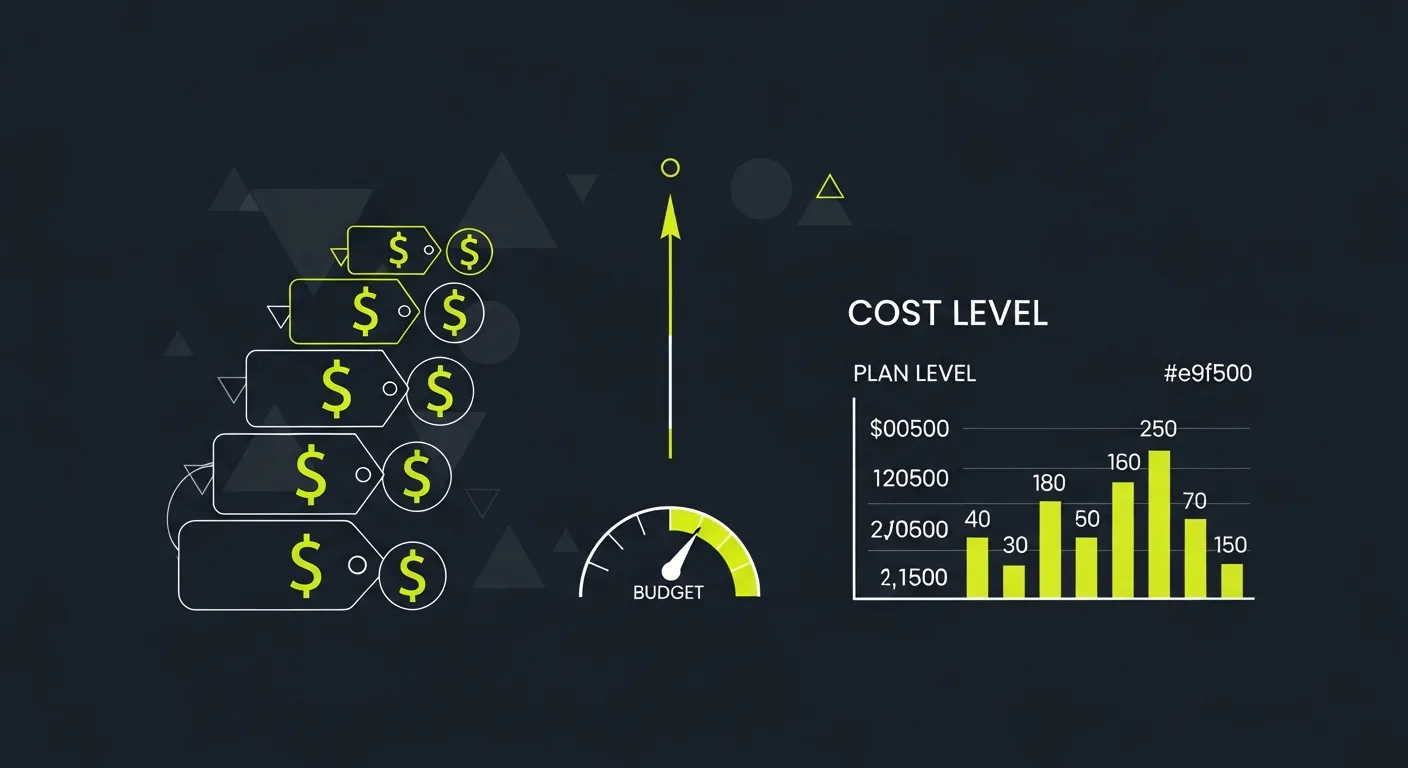
Reputation management cost in 2026 ranges from $0 for basic DIY monitoring to $10,000 or more per month for full-service agency work. Most local businesses — restaurants, clinics, plumbers, law firms — land somewhere between $19 and $99 per month using software that automates the repetitive parts. Hiring an agency costs $500 at the floor and $1,500 to $5,000 for anything with real account management. Here's exactly what each tier includes and how to decide what fits your situation.
Reputation Management Pricing Tiers at a Glance
| Tier | Who it's for | Monthly cost |
|---|---|---|
| Free / basic monitoring | Getting started, very low volume | $0–$15 |
| AI software — single location | Local businesses, SMBs | $19–$49 |
| AI software — multi-location | Chains, franchises, groups | $50–$149 |
| Entry agency retainer | Businesses wanting hands-off help | $500–$1,500 |
| Full-service agency | Mid-market brands, larger needs | $1,500–$5,000 |
| Enterprise / crisis | Large brands, legal situations | $5,000–$10,000+ |
The jump from software to agency is significant — not just in dollar terms but in what you're actually buying. We'll get into why that gap exists and when it's justified.
What Does Reputation Management Cost in 2026?
How much does reputation management cost for a single location? The direct answer: a single-location business should budget $19 to $49 per month for software that handles the essentials — automated review requests, monitoring across platforms, and AI-assisted responses. That's the range where most local businesses get the best return. Agencies start at $500 per month for entry-level retainers, with $1,500 to $3,000 being a more realistic number for anything that includes a real account manager and custom work.
What you pay depends on four variables: how many locations you're managing, how much of the work you want handled for you, how quickly you need results, and what problem you're trying to solve. A restaurant that wants more Google reviews has different needs from a dental practice managing a reputation crisis triggered by a news story.
Reputation management covers several overlapping activities. At the center: review collection (getting customers to leave reviews in the first place) and review monitoring (knowing when new reviews come in and what they say). Layered on top: responding to reviews, tracking sentiment trends, managing business listings for consistency, and — at the higher end — search engine reputation work that targets negative results in Google search rather than review platforms.
The mistake most businesses make is paying agency rates when software handles 80% of what they actually need. The opposite happens too: treating review management as something that can run on manual effort, then watching it quietly fail when nobody follows through consistently.
For a line-by-line breakdown of costs by service type, see our reputation management cost breakdown.
DIY Reputation Management: What You Can Do for Free (or Near-Free)
Free reputation management is real. Here's what's genuinely available without paying anything:
Google Business Profile. Claiming and optimizing your profile costs nothing. Responding to every review through Google's interface is free. Google also provides a shareable review link — paste it into a follow-up email, put it on a receipt, add it to your email signature. Done consistently, this works. The problem is that "done consistently" is a big ask when you're also running a business.
Manual email follow-ups. If you have customers' email addresses, a simple post-visit email asking for a review can generate real responses. Something like: "Thanks for visiting — we'd love to hear how it went. Here's our Google review link if you have two minutes." You don't need a fancy tool to send this from a basic email account. What you need is the discipline to do it after every transaction, week after week.
Google Alerts. Setting up alerts for your business name catches news mentions, forum references, and new web pages that mention you. It won't catch reviews, but it's better than no monitoring. Free.
Free tiers from paid tools. Some platforms offer limited free plans — usually basic monitoring with no automation. You get a single dashboard for incoming reviews, but you're still doing the work of requesting and responding manually. Functionally not much different from checking Google directly, just slightly more organized.
The honest assessment of free: it works when someone has real time and genuine discipline to execute it. For most business owners managing multiple responsibilities, manual review follow-ups stop happening after a few weeks. The Google profile response queue grows. The effort trails off. That's the actual reason people pay for software — not because the free tools don't work, but because the free tools depend on human consistency that doesn't hold up over time.
The $0 to $15 tier
At this price point you're buying monitoring without automation. You get alerts when reviews come in, a consolidated dashboard to view and respond, and sometimes basic reporting on rating trends. Review requests are still manual — you're sending them yourself. These tools suit very small operations, or businesses where the owner already has a reliable system for requesting reviews and just wants one place to see incoming feedback.
Hiring an Agency: What Drives the Price Up
Agency pricing is where the most confusion happens. Two firms can both call themselves "reputation management agencies" and charge $800 and $3,000 per month for what sounds like the same service. Here's what actually moves the number:
Labor. Software charges you infrastructure costs spread across thousands of customers. Agencies charge you for people's time. A dedicated account manager who reviews your profiles daily, writes response copy, runs monthly reports, and joins calls — that's 5 to 15 hours of skilled work each month. At agency billing rates of $100 to $200 per hour, that's $500 to $3,000 in labor before the agency adds overhead and margin.
Scope. There's a big difference between "we monitor reviews and post responses" and "we manage your online reputation." The first is narrow and relatively affordable. The second often includes search engine reputation work — creating content and building citations to push down negative Google search results, not just review-platform scores. Search engine reputation work takes months, requires content writers, and costs significantly more than review management alone.
Location count. Managing one location is simpler than managing 25. Multi-location businesses pay more because the work scales with profile count, review volume, and reporting complexity. An agency managing a 30-location franchise network needs more staff hours per month than one managing a single clinic.
Response speed commitments. Some clients need every negative review responded to within two hours. That requires the agency to have staff actively monitoring inboxes. Real-time coverage is a premium service that shows up in the retainer.
Reporting depth. There's a gap between a monthly PDF that shows your average rating and a full analysis comparing your sentiment trends to competitors, breaking down common complaint themes, and recommending responses to specific patterns. Analytical reporting takes more time and skilled people, and it costs more.
Agency overhead. Beyond the direct service cost, you're paying for the agency's office, management layer, sales team, and profit margin. That overhead is real and it's baked into every client's bill. Software spreads similar infrastructure costs across thousands of customers, which is why it can be offered at $39 per month.
Entry-level agencies at $500 to $1,500 typically deliver: review monitoring, templated responses (sometimes reviewed by a human, sometimes automated), and a basic monthly summary. Don't expect a dedicated account manager, strategic input, or meaningful customization at this tier. You're often one of 50 or more clients managed by the same junior staff member.
Mid-tier agencies at $1,500 to $5,000 typically include: custom-written responses that match your brand voice, a named account manager, monthly strategy calls, and sometimes content creation as part of the package.
Enterprise work above $5,000 covers organizations with genuine brand reputation issues — active news coverage, legal situations, or large franchise networks where centralized management saves more than the retainer costs.
What's Included at Each Price Point
Here's a realistic deliverables breakdown across the main tiers:
Free / $0–$15 per month
- Review monitoring (email alerts when new reviews come in)
- Basic dashboard to view and respond manually
- No automation
- Often limited to one or two platforms
AI-powered software / $19–$49 per month (single location)
- Automated review request campaigns via email and SMS
- Multi-platform monitoring (Google, Yelp, Facebook, others)
- AI-drafted response suggestions you review before posting
- Rating trend reports and analytics
- One business location
- Self-serve support (help center, chat — no dedicated manager)
Software / $50–$149 per month (multi-location)
- Everything in the single-location tier
- 2 to 10 business locations
- Aggregated reporting across all locations
- Sometimes includes bulk campaign scheduling and location comparison dashboards
Entry agency / $500–$1,500 per month
- Review monitoring across major platforms
- Responses posted on your behalf (often from templates)
- Basic monthly report
- Shared account manager across many clients
- No search engine reputation work
- 1 to 2 day turnaround for questions or escalations
Full-service agency / $1,500–$5,000 per month
- Custom-written responses in your brand voice
- Named, dedicated account manager
- Monthly strategy calls included
- Sometimes: content creation to address search-level reputation issues
- Competitor monitoring
- Faster escalation protocol for crisis situations
Enterprise / $5,000–$10,000+ per month
- All of the above, plus search engine reputation management
- PR coordination and crisis communications support
- Legal review integration (relevant for healthcare, finance)
- Custom executive reporting and dashboards
- SLAs with defined response-time guarantees
Red Flags: What You're Paying For vs What You're Getting
Reputation management has a higher-than-average density of overselling. Here are the most common warning signs:
"We monitor 100+ review sites." Nearly all reviews that actually affect your business come from three sources: Google, Yelp, and Facebook. Monitoring 100 platforms is a marketing number. What matters is whether the platforms your customers actually use are properly covered. Ask which specific platforms are included in active monitoring and response scope.
Review removal guarantees. No legitimate provider guarantees removing a genuine negative review from Google. Google's policies allow removal of reviews that violate its terms — spam, fake reviews, off-topic content — but real feedback from real customers stays up. A firm promising removal of legitimate reviews is either misleading you or using tactics that put your listing at risk.
Rating guarantees. "We'll get you to 4.5 stars in 90 days" is a promise no provider can keep. Your star rating reflects what customers say. Aggressive review solicitation improves ratings over time by adding more positive reviews, but no one controls customer sentiment. Anyone promising specific outcomes in specific timeframes is selling you confidence they don't have.
Vague reporting. You should be able to see exactly what happened each month: how many review requests went out, how many customers opened them, how many reviews came in, and what responses were posted. If a provider's reporting amounts to "we've been managing your reputation" without specifics, you're flying blind. Good providers give you data, not summaries of their effort.
Long contracts on short evidence. Some agencies require six-month or twelve-month contracts before you've seen how they perform. Month-to-month terms are the right starting point, especially early in a relationship. A provider confident in their results doesn't need to lock you in.
Fake review offers. A provider who offers to "build up your review base" through their network of reviewers is offering you fraud. Google has become substantially better at detecting coordinated fake review patterns. The downside risk — listing suspension, Google removing your profile — far exceeds any short-term rating improvement.
When Does It Make Sense to Invest in Reputation Management?
Not every business at every stage needs to spend money here. Here's a practical framework:
Invest if you're losing customers to better-rated competitors. If someone searches your service category in your city and your 3.7-star rating appears next to a competitor's 4.5, you're losing people before they ever reach your website. A one-star improvement in rating is associated with meaningful revenue increases in multiple studies — the typical range cited in restaurant research is 5 to 9 percent. The cost of a $39-per-month software subscription is small against the cost of those lost leads.
Invest if you're getting reviews but responding to none of them. Not responding to reviews — especially negative ones — is a visible signal to potential customers that nobody is paying attention. Automated software eliminates the excuse of not having time. You spend 30 minutes a week reviewing and approving AI-drafted responses rather than writing them from scratch.
Invest if review requests happen inconsistently. Verbal asks, occasional follow-up emails, a sign on the counter — these are better than nothing but they're unreliable. They depend on whoever remembers to do them that week. Automated campaigns that trigger based on transactions or appointments run whether or not anyone is thinking about reviews that Tuesday afternoon.
Invest if you're in a trust-sensitive industry. Healthcare, legal, financial services, home services — these are sectors where reputation is the primary purchase driver. A potential patient researching surgeons, or a homeowner deciding which plumber to call, reads reviews differently from someone picking a coffee shop. In these categories, reputation management isn't optional.
Software makes sense when you're managing one to five locations, your review volume is under 150 per month, and you have capacity to review AI-drafted responses before they go out. The tool handles the heavy lifting; you spend 20 to 30 minutes per week on oversight.
An agency makes sense when you're dealing with an active reputation crisis, you're managing 20 or more locations without internal staff to handle it, or you need search engine reputation work — issues that show up in Google's search results rather than just on review platforms. The economics of an agency only work when the manual coordination cost of doing it yourself exceeds the retainer fee.
Neither makes sense when your transaction volume is too low to generate a meaningful pool of satisfied customers to ask. Review management software works best when you have regular customer flow — at least 20 to 30 transactions per month. Pre-launch businesses should focus on product and operations first.
How to Calculate Whether the Cost Makes Sense
Run a simple estimate before signing anything.
What's the average lifetime value of a new customer? For a dentist, that's $800 to $3,000 per patient relationship over time. For a plumber, $200 to $600 per project plus referrals. For a restaurant, $150 to $400 per year per regular.
Reputation management software at $39 per month costs $468 per year. If better reviews help you win one extra customer per month who would otherwise have chosen a competitor, that's almost certainly a strong return. For most local businesses, this threshold is low.
Agency math is harder because the costs are higher. A $2,000 per month retainer runs $24,000 per year. That number needs to be generating clear value — in additional customers, in time saved managing the work internally, or in risk mitigation from faster crisis response. For a business where average customer value is high and reputation demonstrably drives conversion, the ROI is achievable. For a business with a $40 average ticket, it's a much harder case to make.
One useful question before hiring an agency: could software at $49 per month handle 80 percent of what we need? In most cases for local businesses with one to five locations, the honest answer is yes.
Reputation Management Cost 2026: The Bottom Line
The average cost reputation management businesses pay in 2026 runs from nothing to five figures per month. But for most local businesses — restaurants, practices, service companies — the right answer sits in the $19 to $49 per month range for AI-powered software.
That tier has improved significantly over the past few years. Automated review request campaigns now run across email and SMS without manual intervention. AI-drafted responses are genuinely useful — not perfect, but a strong starting point that saves real time compared to writing from scratch. Monitoring is real-time. Reporting shows you what's actually happening, not just what your rating is today.
The gap between what you get from $49 software and what you get from a $1,000 agency retainer is narrower than it used to be. Agencies still make sense in specific situations: active reputation crises, networks of 20 or more locations, or search engine reputation work targeting Google results rather than review platforms. But for the majority of local businesses, an agency retainer is buying overhead, margin, and account management that software can replace at a fraction of the cost.
The goal isn't finding the most expensive solution. It's building a system that runs consistently — one that doesn't depend on someone remembering to send review requests that week or checking the Google profile every morning.
See What Praising.ai Costs
Praising.ai handles review collection, monitoring, and AI-drafted responses for local businesses — starting at $19 per month for a single location. No agency contract. No long-term lock-in.
Ready to grow?
Turn happy customers into 5-star reviews
Praising.ai automates review requests for Google, Trustpilot and the other review sites you use. Businesses see an average 3x increase in reviews within 30 days.
Written by
· 106 articlesMarcus Webb
Reputation Management Specialist
Marcus has spent over a decade helping small and medium businesses understand online reviews and local search. He writes about Google Business Profile, review automation, and the mechanics of reputation management—always from the angle of what actually moves the needle for independent businesses.
View all articlesGet weekly review tips
Actionable strategies to grow reviews and revenue, straight to your inbox.
No spam. Unsubscribe anytime.
Get more 5-star reviews on autopilot
Praising.ai automates review requests for Google, Trustpilot and the other review sites you use — free to start, no credit card required.
Start FreeFree 14-day trial