Best AI Tools for Online Reputation Management in 2026

TL;DR
Six AI reputation management tools dominate in 2026, each suited to different business sizes and budgets. Praising.ai leads for small and mid-sized local businesses with full automation starting at $19 a month, while Birdeye and Podium serve enterprise and SMS-heavy use cases at significantly higher price points. Match the platform to your location count, budget, and primary review channels.
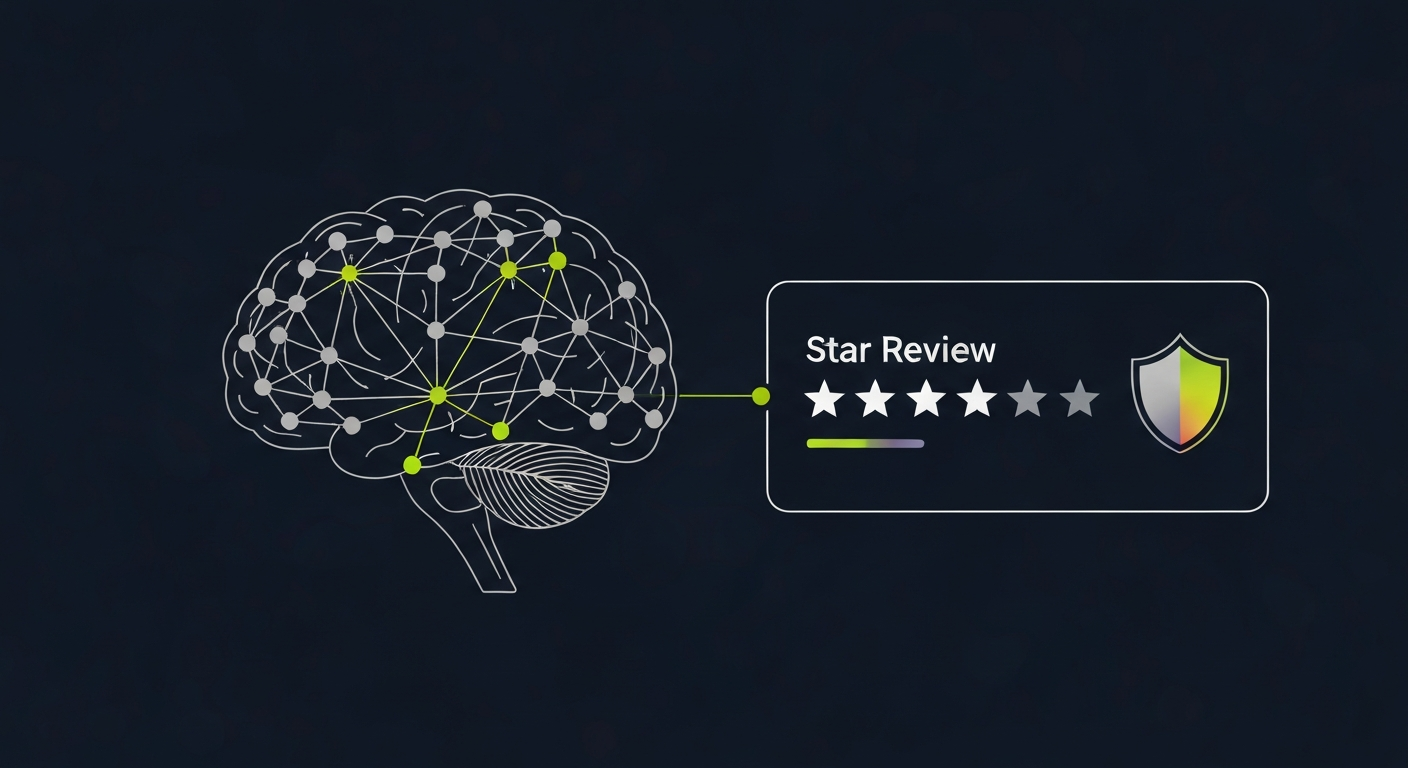
Your online reviews can make or break your business. Customers read them before they call. Many people form a bad view of a brand that doesn't reply quickly. Keeping up by hand is too slow. The top local brands use AI tools to stay ahead. This guide shows you the best ones and how to pick the right fit.
Why AI Has Become Essential for Online Reputation Management
Five years ago, you could log in once a day and catch up on reviews. You'd write replies one by one. It took time, but it worked. Now it doesn't.
Reviews come in fast from Google, Yelp, Facebook, and more. You need to reply the same day. Many buyers expect a reply within 48 hours. If you miss them, trust drops.
AI tools fix this. They watch all your review sites at once. They draft replies in seconds. They send review requests at the right time. Brands using AI reply significantly faster. They get more reviews too.
The question isn't whether to use AI. It's which tool fits your needs. For a workflow-focused checklist, our AI reputation management agent guide explains how monitoring, AI drafts, review requests, and human approvals fit together.
The 6 Best AI Tools for Online Reputation Management in 2026
- Praising.ai — Best All-in-One AI Reputation Platform
Best for: Small and mid-sized local brands that want full AI power at a low price.
Praising.ai does it all in one place. It checks your Google and Trustpilot reviews every day and links 19 more review sites. It drafts AI replies. It sends review requests by email and SMS. It scores your brand against rivals. Big-name tools can cost hundreds per site per month. Praising.ai gives you full control at a price that makes sense.
The AI follows the tone and instructions you set. It drafts a reply to every review. Nothing is posted until you approve it. Review requests go out after a visit, a sale, or a service call — timed to get the best results.
Key AI features:
- Daily tracking of Google and Trustpilot reviews, with Yelp, Facebook, TripAdvisor and 16 more sites linked
- AI reply drafts that wait for your approval
- Review requests sent by trigger — visit, purchase, or service
- An on-demand AI Sentiment report on your recent reviews
- Rating trends and a weekly email report
Pricing: Plans starting at $19/month. Start free trial
- Birdeye — Best for Multi-Location Enterprise Businesses
Best for: National chains and health groups with 50+ locations.
Birdeye is built for large brands. Its AI tools write review replies, track sentiment, and show how you stack up against rivals. One inbox handles all your messages. It covers 200+ review sites and links to CRM and POS systems.
The catch is price. Full AI access can run $300–500 per location per month. That's hard to justify for a small chain or one-location shop. Setup takes work too — most users need IT help and staff training.
For a full look at what you get, see our Birdeye alternatives guide.
- Podium — Best for SMS-First Review Management
Best for: Service brands and car dealers where text drives the best review rates.
Podium was built for text. Users report much higher review rates through SMS than email alone. The AI writes reply drafts, takes payments, and handles chats — all from one text thread.
Podium now covers web chat, calls, and ad tools. That scope is reflected in the price — full access runs $300–500 per month. AI review tools are on higher-tier plans.
- Reputation.com — Best for Large Franchise Operations
Best for: Franchise groups with 200+ sites and deep reporting needs.
Reputation.com targets big operations. Its main clients are large firms in health, auto, and finance. AI tools cover sentiment tracking, rival analysis, and reply drafts. A large support team helps with rollout.
Its reporting stands out. Dashboards let teams drill down by region, district, or single site. Brands can spot gaps fast. It's priced for large enterprise buyers.
- Yext — Best for Brand Knowledge Management at Scale
Best for: National brands that manage listings, local pages, and reviews in one system.
Yext started as a listings tool. It now offers Review Monitoring and AI Review Response. The main draw is accuracy — Yext pushes your business data (hours, address, phone) to 200+ sites at once. This cuts the listing errors that hurt local search rank.
The AI review tools work well but aren't the main focus. If you need strong listings plus review tracking, Yext is a solid pick. If your main goal is reply speed and review volume, a tool built just for that may suit you better.
- Vendasta — Best for Marketing Agencies Managing Client Reputations
Best for: Digital marketing agencies that resell review services to local brands.
Vendasta is a white-label tool for agencies. Its AI covers review tracking, reply drafts, and review requests — packaged for agency use. Each client gets a branded view. The agency sets its own price.
This works well for agencies with many local clients. If you buy direct, the extra agency layer adds cost and friction.
AI Reputation Software vs. AI Reputation Consulting Services
Many brands search for "AI online reputation consulting" and "AI reputation software" and want the same thing. The delivery model is different.
AI reputation software puts the tools in your hands. You watch reviews, approve replies, and run request campaigns. You pay a set monthly fee. Your team does the work. This fits well when you can spend 1–3 hours a week on reviews and want full control of what goes out.
AI reputation consulting services are fully managed. An agency runs all of it with AI-powered tools. You approve the plan and read monthly reports. This works when you have no time for reviews, you're in a crisis, or you run a large multi-site brand.
Hybrid AI — the model Praising.ai uses — runs the high-volume routine tasks for you. Request campaigns go out on their own, and the AI drafts a reply to every review for you to approve. You stay in charge of every reply. You get most of the value of a managed service at a fraction of the cost.
Cost breakdown:
- AI software: $30–500/month per site based on the tool
- Managed consulting: $500–3,000+/month for full service
- Hybrid AI (Praising.ai): from $19/month with low internal time
For most small local brands, a well-set-up AI tool delivers 80–90% of the results of a managed service at 10–20% of the cost. Buy crisis help and custom strategy only when you need them.
Core AI Features to Evaluate in Any Reputation Tool
Review Monitoring and Alerts
Good review tracking is the base of any AI strategy. Tools vary a lot in speed, coverage, and alert options. Ask these questions:
- Site coverage: Does it watch Google, Facebook, Yelp, TripAdvisor, Glassdoor, and the sites your buyers use?
- Update speed: How fast does a new review show up? The best tools update in near real time.
- Alert rules: Can you set alerts for low star ratings, key words, or a sudden spike in review volume?
- Multi-site view: Can you see all locations in one place and drill into a single site?
AI Review Response Generation
Reply quality varies more than any other AI feature. Test each tool with three review types: a glowing 5-star review, a neutral 3-star review with mixed views, and a detailed 1-star complaint. A good AI handles each one differently. It adds a personal touch to the 5-star, asks for more detail on the 3-star, and shows care and ownership on the 1-star.
Platforms like Praising.ai features go further. They draft a reply to every review and post it only after you approve it. You set its tone and instructions once, and every draft follows them.
Sentiment Analysis and Reputation Scoring
Simple labels like "positive" or "negative" don't give you much. Look for topic-level insight — not just that reviews are bad, but that complaints focus on wait times or staff. This turns your data into action steps.
AI scoring gives you one score for your brand health. It factors in how new reviews are, how big each site is, how fast you reply, and how tone has shifted. Use it to track progress and compare with rivals.
Automated Review Collection
The biggest win most brands can get isn't better replies. It's getting more reviews from buyers who wouldn't have written one. Check how the tool triggers requests (from real actions?), which channels it uses (email, SMS, chat), whether it supports A/B tests, and how it handles opt-outs.
For a full look at pricing by tier, this free vs. paid comparison breaks down what you get at each level.
How Much Does AI Reputation Management Software Cost?
AI review tools use a few pricing models:
Per-site pricing is most common for local brands. Entry-level AI runs $20–100/month per location. Full-feature tools with AI cost $100–300/month. Large-brand tools like Birdeye or Reputation.com run $300–500+/month.
Flat-rate pricing charges one fixed fee per month, up to a cap. After that, per-site fees apply.
Usage-based pricing charges per reply, per review request, or per tracked site. It can be cheap at low volume but gets hard to predict at scale.
What you'd pay:
- One-site brand on Praising.ai: $19–49/month for full AI
- 10-site restaurant group: $49/month on Praising.ai Pro, which covers up to 10 locations
- 50-site health network on Birdeye: $15,000–25,000/year
- 500-site enterprise on Reputation.com: $50,000–150,000+/year
Before you pick a plan, check your current review volume, your average reply time, and how many review requests you send each month. These numbers show where the biggest gap is — and which tool features will close it.
Building a Long-Term AI Reputation Strategy
AI tools fix specific gaps. A strategy ties them together so results compound month over month.
Start with a baseline. Check your review volume, your average star rating, your reply rate, and your tone across all sites. That's your starting point. Then find where reviews are being lost. If many happy buyers never write a review, you have a collection gap. If your reply time is 48 hours, you have a workflow gap. If rivals score better on service quality, that's an ops issue.
For brands new to this, the complete guide to online reputation management covers the basics before you add AI tools on top.
Set 90-day targets, not open-ended goals. Try: "Grow monthly reviews by 40% through auto requests." Or: "Cut reply time from 48 hours to 4 hours." AI tools make these easy to track. There's no reason to manage reviews without checking if you're improving.
Choosing the Right AI Reputation Tool for Your Business
Start with site coverage. List every review site your buyers use. Check that any tool you test covers all of them before you go further.
Match the depth of AI to your team's time. If one person spends 30 minutes a week on reviews, full AI with low oversight is the right fit. If you have a marketing team, reviewing AI drafts may give you better brand control.
Look at analytics quality. The best tools don't just show data — they show you what to do. Knowing your star rating is fine. Knowing that service quality scores have dropped recently and seeing the top three complaint topics is much more useful.
Check system links. Does the tool connect to your CRM, POS, or support desk? Review requests sent after real customer events beat manual import lists by a large margin.
Think about total cost. Per-reply and per-site fees add up in different ways at scale. Run the numbers for your actual site count and review volume before you sign. For a deep comparison, see our AI reputation tools guide and our top review software picks for 2026.
Start with a list of the review sites your buyers use most. Check that each tool you test covers all of them before you commit.
Frequently Asked Questions
What AI tools help manage online reputation?
The top AI tools for online reputation management in 2026 are Praising.ai, Birdeye, Podium, Reputation.com, Yext, and Vendasta. Each one offers review tracking, AI replies, and analytics at different price points. Praising.ai offers the best mix of full AI and low cost for small local brands.
What is AI online reputation consulting?
AI online reputation consulting is a managed service. An agency uses AI tools to track, reply to, and grow your reviews on your behalf. They do the daily work and report back to you. This works best when you have no time to manage reviews, or when you're dealing with a major brand crisis.
How does AI improve online reputation management?
AI helps in a few key ways. It gathers your reviews in one place. It writes review replies in seconds. It sends review requests at the right moment. It also spots tone shifts that point to real problems — all at a pace no human team can match.
Can AI automatically respond to reviews?
Yes. Most AI review tools can post replies to routine positive and neutral reviews on their own. Complex or sensitive reviews are held for a human to check first. This keeps quality high while cutting reply time for high-volume brands.
What is the best AI tool for reputation management in 2026?
Praising.ai is the best all-in-one pick for most local brands. It combines Google and Trustpilot review tracking (with 19 more sites linked), AI reply drafts, smart review requests, and a Maps scan of nearby competitors in one tool. For large multi-site brands, Birdeye offers deeper CRM links at a higher price.
Ready to grow?
Turn happy customers into 5-star reviews
Praising.ai automates review requests for Google, Trustpilot and the other review sites you use. Businesses see an average 3x increase in reviews within 30 days.
Written by
· 65 articlesLeila Foster
AI & Digital Marketing Writer
Leila covers the intersection of AI and customer marketing—specifically how businesses use social proof, automated testimonials, and AI-generated responses to build trust and convert more visitors. She researches the tools and workflows behind modern reputation marketing so you don't have to.
View all articlesGet weekly review tips
Actionable strategies to grow reviews and revenue, straight to your inbox.
No spam. Unsubscribe anytime.
Get more 5-star reviews on autopilot
Praising.ai automates review requests for Google, Trustpilot and the other review sites you use — free to start, no credit card required.
Start FreeFree 14-day trial