Category
Review Strategy
34 articles about review strategy.
Getting reviews without a plan is like running ads without tracking — you spend effort with no way to know what works. A real review strategy answers specific questions: which customers to ask, on which platform, how soon after their visit, and what happens when someone says no. The articles and guide below break down the systems that separate businesses with 30 reviews from those with 300.
How to Request Reviews from Clients: Templates & Tools
Copy-paste review request templates, timing advice, and a tool comparison to help you get more client reviews without wasting hours on manual outreach.
5-Star Review Examples by Industry: 100+ Templates (2026)
100+ real 5-star review examples across 10 industries. Copy-paste templates for restaurants, dentists, hotels, salons, contractors & more.
Review Automation for Small Business: Setup Guide & Best Tools (2026)
Compare the best review automation tools for small businesses in 2026. Includes setup steps, pricing breakdowns, and a clear recommendation to help you decide.
Positive Reviews Examples: 80+ Templates for Every Industry
80+ positive reviews examples for every industry. Copy-paste templates for Google, restaurants, healthcare, retail, and more — ready in under a minute.
Positive Reviews Examples: Copy-Paste for Google, Yelp & Amazon
Platform-specific positive review examples you can copy and paste for Google, Yelp, and Amazon. Includes what makes each platform different and how to ask.
Good Reviews Examples: 75+ Real Copy-Paste Samples (2026)
Browse 75+ good review examples you can copy and paste for Google, Yelp, and more. Ready-to-use templates for any business.
Positive Reviews Examples: Copy & Paste for Any Platform
Positive reviews examples for Google, Yelp, and Amazon. 50+ copy-and-paste templates by platform and situation — customize and post in under a minute.
40+ Google Review Response Templates by Type (2026)
40+ real Google review response templates sorted by type—5-star, negative, neutral, and more. Copy, customize, and respond faster.
Short Positive Review Examples: 60+ Templates That Get Read
60+ short positive review templates for every industry. Copy-paste examples that are specific, credible, and actually get read by potential customers.
100+ Positive Review Examples to Copy and Paste (2026)
100+ positive review examples and templates for every industry. Copy, paste, and customize for restaurants, dentists, hotels, retail, and more.
Good Review Examples: What Makes a Review Effective
Learn what separates a useful review from a forgettable one, with 40+ real samples across restaurants, healthcare, retail, home services, and more.
Good Review Examples: 40+ Real Samples for Every Industry
40+ real good review examples across restaurants, healthcare, retail, and more. Learn what makes each one work and how to get reviews like them.
AI Customer Testimonial Platform: How to Choose
Compare the best AI customer testimonial platforms for small businesses. Features, pricing, and a clear recommendation to help you decide fast.
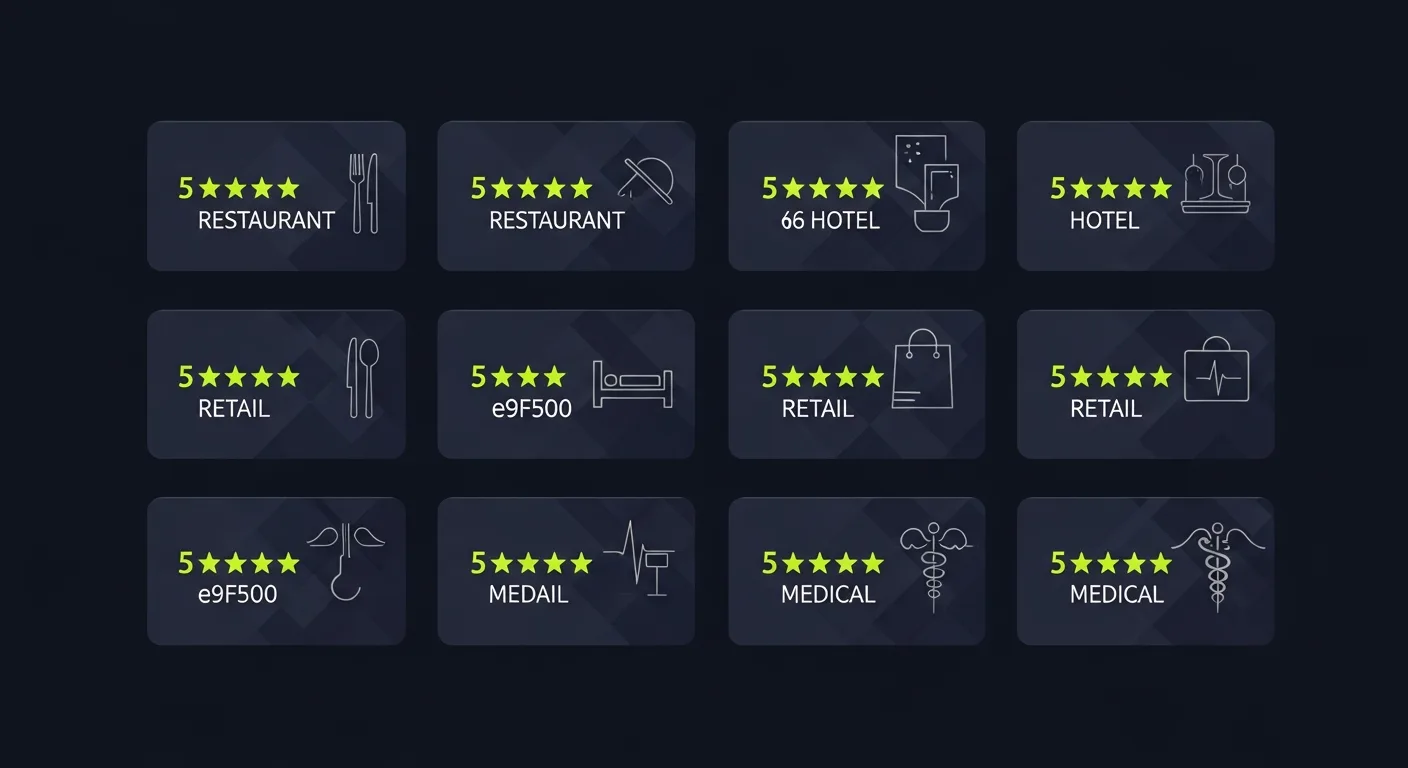
5-Star Review Template: 75+ Copy-Paste Examples by Industry
Need a 5 star review template? Get 75+ copy-paste examples for Google, Yelp & Trustpilot across healthcare, restaurants, hotels, automotive, salons, and more.
Highly Recommended Review Sample: 75+ Free Examples (2026)
Copy a highly recommended review sample in seconds. 75+ templates for restaurants, hotels, healthcare, home services, salons, and more — ready to post.
Good Review Example: 10 Real Samples (Why Each Works)
10 real good review examples with line-by-line analysis of what makes each one work — restaurants, healthcare, hotels, salons, law firms, auto repair, and more.
Writing a Review: Examples, Tips & Templates (2026)
Learn how to write a great review with 15+ real examples across industries, plus tips and templates to get started writing a review example that actually helps.
Positive Reviews Examples: Copy and Paste Templates (75+)
75+ positive reviews examples you can copy and paste for any industry. Ready-to-use templates for restaurants, dentists, hotels, salons, and more.
Amazon Product Review Management Software: Top Tools Compared (2026)
Compare the best Amazon product review management software in 2026. Features, pricing, and analysis to help sellers protect and grow their ratings.
Best Customer Review Software for Small Business 2026
Compare the best customer review software for small businesses in 2026 — pricing, features, tradeoffs, and when to choose Praising.ai over Birdeye, Podium, or NiceJob.
Automated Client Testimonials for Agencies: A 2026 Guide
Learn how agencies can build automated testimonial systems that collect client reviews consistently, with workflows, timing strategies, and tool recommendations.
Patient Review Management System: The Complete Guide to Patient Review Generation
A guide to patient review tools for health clinics. Learn how review collection works, what features to look for, and how to get more reviews safely.
How to Request Healthcare Reviews from Patients (HIPAA-Safe Templates)
Learn exactly how to request healthcare reviews from patients without violating HIPAA. Includes compliant email and SMS templates, timing best practices, and automation tips for medical practices.
Healthcare Reviews Software: The Complete 2026 Buyer's Guide
The definitive guide to healthcare reviews software in 2026. Compare patient review platforms built for HIPAA compliance, discover which features matter most for medical practices, and learn how to choose the right tool.
Multi-Platform Review Strategy: Yelp, Google & Facebook 2026
Learn how to get more reviews on Yelp, Google, and Facebook with a proven multi-platform strategy. Practical tactics, timing tips, and platform rules explained.

How to Get More Google Reviews for Healthcare Practices in 2026
Learn proven strategies to get more Google reviews for your healthcare practice in 2026. HIPAA-compliant methods, timing tips, and real scripts included.

How to Respond to Positive Reviews: 20+ Templates
Learn how to respond to positive reviews with 20+ copy-paste templates. Build customer loyalty, boost local SEO, and turn happy reviewers into repeat buyers.

How to Get More Yelp Reviews in 2026
Learn proven strategies to get more Yelp reviews for your local business in 2026. Practical tactics that work within Yelp's rules.
Review Generation Strategies That Actually Work
Learn proven review generation strategies that get real customers to leave feedback. Practical tactics, timing tips, and channel breakdowns for small businesses.
Customer Feedback Loop Best Practices for 2026
Learn how to build a customer feedback loop that actually improves your business. Actionable steps, real examples, and proven strategies for small businesses.
Review Gating: Is It Legal and What Are the Risks?
Review gating violates FTC rules and Google's policies. Learn what it is, why it's risky, and how to collect more reviews the right way.

Customer Review Software Comparison: Top 10 Platforms 2026
Compare the top 10 customer review software platforms for 2026. Features, pricing, pros/cons of BirdEye, Podium, Trustpilot, and more to find your perfect fit.
Boost Your Google Reviews 10 Proven Strategies for 2026
Boost your business with 10 proven strategies to get more Google reviews. Optimize your profile, automate requests, and manage reviews effectively.
Why Your Agency Needs a Testimonial Strategy and How to Build One
Build a powerful agency testimonial strategy. Collect compelling client stories, organize them efficiently, and use them to win new clients.
Getting reviews with no plan is like running ads with no tracking — effort spent with no way to know what works. A review strategy turns scattered feedback into a steady system. It targets the right buyers, asks at the right time, picks the right sites, and compounds over months. Below, we break down what sets shops with 30 reviews apart from those with 300.
What a review strategy actually is (and isn't)
A review strategy isn't "ask everyone for a review." That's a tactic, and a blunt one. A real plan answers clear questions: Which buyers should we ask? On which site? How soon after their purchase or visit? What do we say? And what happens when someone says no — or worse, leaves a bad review?
The gap shows up in numbers. Shops that blast the same email to every buyer see 3-5% review rates. Those with a split plan — different notes, custom timing, per-site asks — hit 15-20%. That's the gap between 5 new reviews a month and 30.
Choosing which platforms to prioritize
Not all review sites matter the same for every shop. A cafe lives and dies by Google and Yelp. A B2B SaaS firm cares about G2 and Capterra. An online store needs Amazon and Trustpilot. Spreading asks across eight sites thins your impact — pick two or three where your buyers already look, and stack reviews there first.
- Google Business Profile should be priority one for most local businesses. Google reviews feed straight into Local Pack rank. A shop with 80 Google reviews at 4.6 stars shows up above a rival with 200 Yelp reviews but only 12 on Google — because Google trusts its own data most.
- Industry-specific platforms often convert better than general ones. A dentist on Healthgrades or a builder on Houzz reaches people already filtering by trade. These reviews carry more buying intent than a basic Google review, even if the site has less total traffic.
- Don't ignore platforms where you're already getting organic reviews. If buyers leave reviews on Facebook without being asked, lean into that. Organic flow is easier to boost than to start from scratch on a site where you have zero presence.
Timing and triggers: when to ask
Timing is the one thing that most affects whether a buyer leaves a review. Ask too soon — before they try the product — and they have nothing to say. Ask too late — three weeks out — and the feeling is gone. The sweet spot varies by field, but patterns exist.
Service shops (salons, clinics, repair spots) get the best rates within 2-4 hours of the visit. The memory is fresh, the buyer is still thinking about it, and leaving a review feels easy. Online stores do better at 3-7 days after shipping — enough time to open the box and form a view, but not so long the purchase fades.
Praising.ai runs these triggers based on your sales data — no manual tracking needed. You set the delay window; the system does the rest.
Volume vs. quality — why you need both
Many think you must choose: lots of reviews or fewer but detailed ones. In truth, both matter — they serve different goals. Volume signals trust to search engines and browsers. A profile with 200 reviews looks proven. Google ranks it higher. Shoppers see social proof right away.
Quality — meaning detailed reviews that name products or describe real visits — is what wins the person who stops to read. A three-word "great service" adds to your count but sways nobody. A full note about which service they got, how long it took, and why they'd return does the heavy lifting.
Your plan should produce both. Auto SMS asks with one-tap links drive volume — they make it so easy that even busy buyers leave something. Custom email follow-ups with direct prompts ("What did you think of the kitchen remodel?") pull longer, richer replies. Run both at once.
Handling negative reviews as a strategic input
Most shops treat bad reviews as damage to contain. A better view: they're free market research. A one-star post that says "waited 45 minutes for my oil change" tells you exactly where things break down. If three reviews in a month cite the same issue, that's a real signal — not noise.
Bad reviews also give you a chance that good ones don't: a public save. A clear, direct reply to a gripe — one that owns the problem, says what changed, and asks the buyer back — often wows future readers more than ten bland five-star posts. People expect some bad ones. How you handle them shows what kind of shop you are.
The smart move is to build a flow for bad reviews: flag them within an hour, route them to someone who can reply with real details (not canned text), and track if the root issue gets fixed. Browse our getting more reviews and reputation management guides for more on the tactical side.
Build your review strategy
Stop collecting reviews by accident
Praising.ai gives you the auto tools, timing logic, and multi-site tracking to turn scattered feedback into a steady review engine — set up once, let it run.
Get started free →